Level 1 vs Level 2 Charging for Your EV

Home Charging Versus Public Charging for EV Owners
July 28, 2026
Tesla vs J1772 Charger for Home Charging
July 24, 2026
A new EV can come with a charging cable that plugs into a standard wall outlet, which makes level 1 vs level 2 charging feel like an easy decision at first: why install anything else? The answer usually appears after a few days of real driving. If your battery is not recovering overnight, or you are planning your trips around charging sessions, a faster home setup can make EV ownership much easier.
The right choice depends on how far you drive, how long your vehicle is parked, your electrical capacity, and whether you own or manage the property. Level 1 charging can be perfectly practical for some drivers. Level 2 is often the better long-term fit for households, condos, workplaces, and fleets that need dependable daily charging.
Level 1 vs Level 2 Charging: The Core Difference
Both Level 1 and Level 2 chargers use alternating current, or AC, to charge your vehicle. Your EV’s onboard charger converts that power for the battery. The key difference is the voltage available at the outlet or charging circuit.
Level 1 charging uses a standard 120-volt outlet, the same type used for many household devices. Most EVs can charge this way with the portable cable supplied by the manufacturer. It is the simplest option because there is often no dedicated charger installation involved.
Level 2 charging uses a 240-volt circuit, similar to the power used by an electric dryer or range. It requires a properly designed circuit and, in many cases, a wall-mounted charging station. That higher-voltage supply delivers substantially more power, so your vehicle gains range much faster.
The charging station itself matters, but it is only one part of the system. Your vehicle’s charging capability, the circuit size, panel capacity, wiring distance, and local electrical requirements all affect the result.
How Much Faster Is Level 2 Charging?
Level 1 charging typically adds about 3 to 5 miles of driving range per hour. For a plug-in hybrid with a relatively small battery and a short daily commute, that may be enough to replenish the battery overnight. For a battery-electric vehicle, recovering a large portion of the battery can take well over a day.
Level 2 charging commonly adds roughly 12 to 44 miles of range per hour. The exact rate varies by vehicle and charger configuration. A vehicle that accepts less AC power will not charge at the full capacity of every Level 2 station, while a higher-capacity setup may require more electrical infrastructure than a household actually needs.
For most EV owners, the practical difference is simple. With Level 1, you may need several nights to replace a heavy day of driving. With Level 2, many drivers can plug in after work and begin the next morning with the battery ready for their normal routine.
That does not mean faster is always necessary. A driver who travels 20 miles per day, has 12 or more hours at home each night, and can reliably use a dedicated outlet may be well served by Level 1. A household with two EVs, a longer commute, frequent weekend trips, or unpredictable driving needs will usually appreciate the flexibility of Level 2.
Charging speed is not the same as DC fast charging
Level 2 is faster than Level 1, but it is not the same as public DC fast charging. DC fast chargers can add significant range in a short stop because they deliver direct current to the battery at much higher power levels. They are useful on road trips, but they are generally not a residential charging solution.
Home Level 2 charging is designed for the place your EV spends the most time parked. It provides a convenient, lower-cost way to charge at home without relying on public stations for everyday driving.
When Level 1 Charging Makes Sense
Level 1 is a reasonable choice when your charging needs are modest and your electrical setup supports safe use of the outlet. It can work especially well for plug-in hybrids, second vehicles, low-mileage drivers, or owners who are waiting to complete a permanent installation.
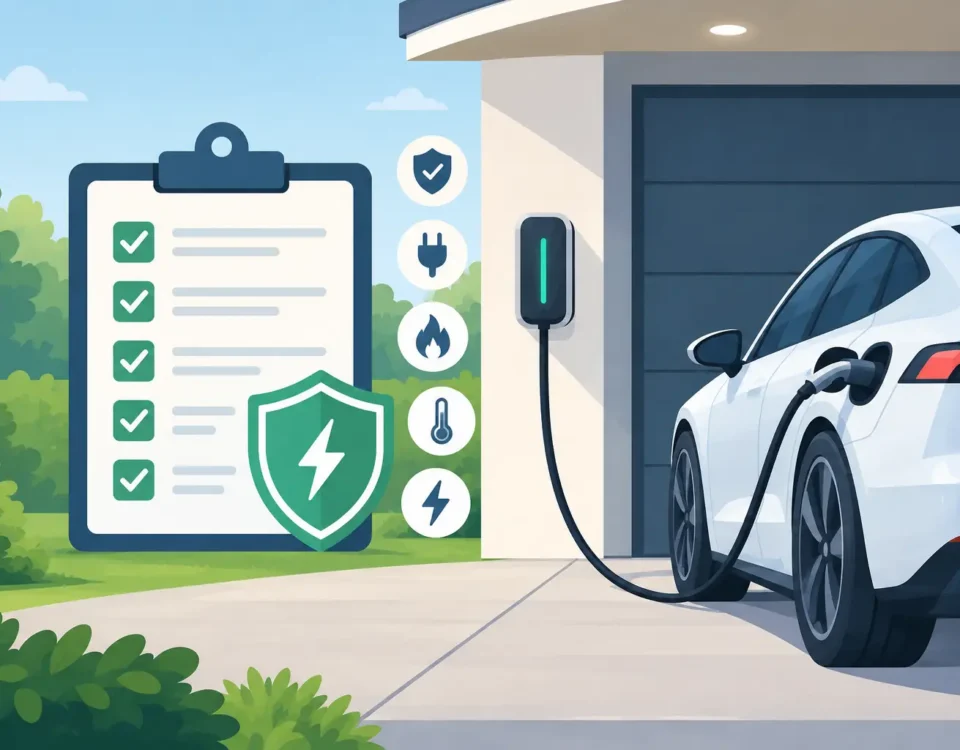
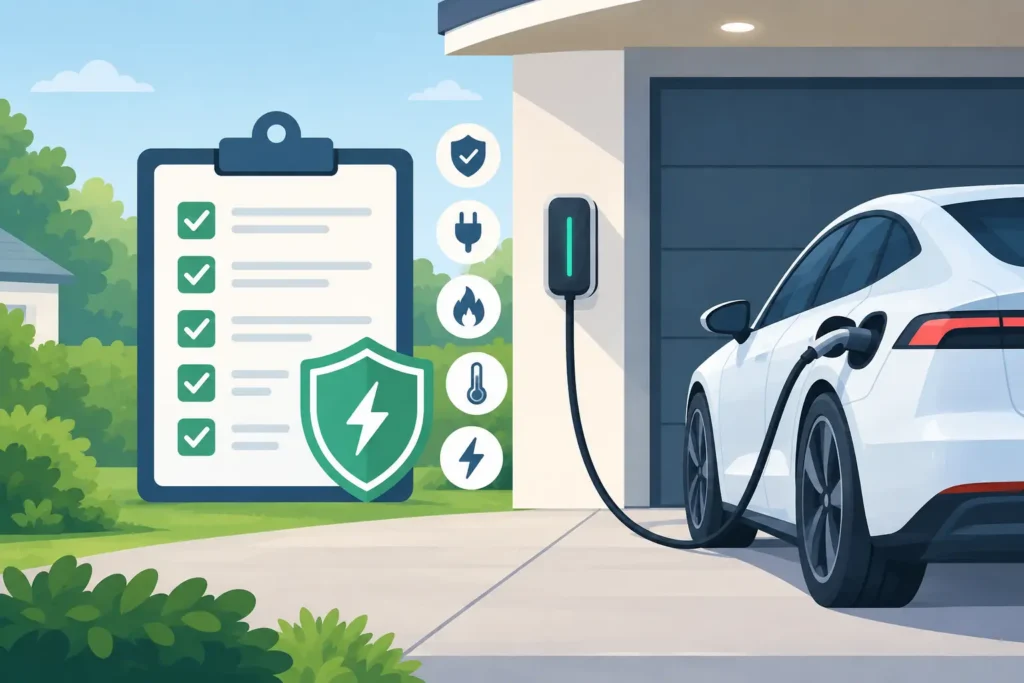
The outlet should be in good condition and appropriate for continuous charging. EV charging is a sustained electrical load, not a quick task like running a blender. Avoid relying on extension cords, worn outlets, or overloaded garage circuits. If a plug feels hot, a breaker trips, or the outlet shows discoloration, stop using it and have the circuit evaluated by a qualified electrician.
Level 1 can also be useful as a backup. Many EV owners keep their portable charging cable in the vehicle for travel or occasional use at a family member’s home. It offers flexibility, even if it is not the primary way they charge.
The trade-off is time. If you come home nearly empty after a busy day, Level 1 may not restore enough range before your next departure. That limitation becomes more noticeable during periods of heavier driving, when charging between errands or overnight becomes essential.
Why Most Homeowners Choose Level 2
Level 2 charging turns home charging into a routine rather than a calculation. Plug in when you arrive, let the vehicle charge while it is parked, and leave with the range you need. For many households, that convenience is the main reason to install a dedicated charger.
A Level 2 installation can also support smart charging features. Depending on the charger and vehicle, you may be able to schedule charging during lower-rate utility periods, review energy usage, control access, or receive charging notifications. These features are helpful, but the most valuable benefit remains reliable overnight charging.
Level 2 is particularly well suited to drivers who commute more than 40 to 50 miles most days, own an EV with a larger battery, or share charging access with another driver. It is also a stronger option when a property is preparing for future EV adoption. Installing the right infrastructure now can prevent avoidable upgrades later.
For Tesla owners and drivers of other EV brands, connector compatibility should be considered before selecting equipment. Some vehicles may need an adapter, while others use a connector that is already built into the chosen charging station. A qualified installer can help match the charger, circuit, and vehicle capability without overspending on equipment that will not improve charging speed.
What a Level 2 Installation Involves
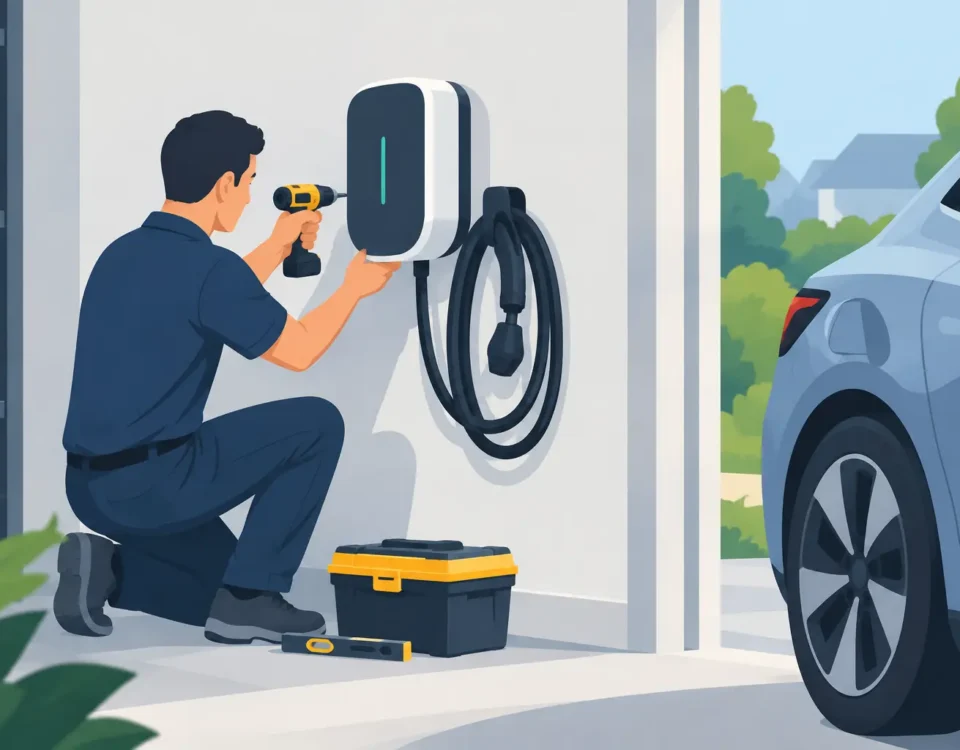
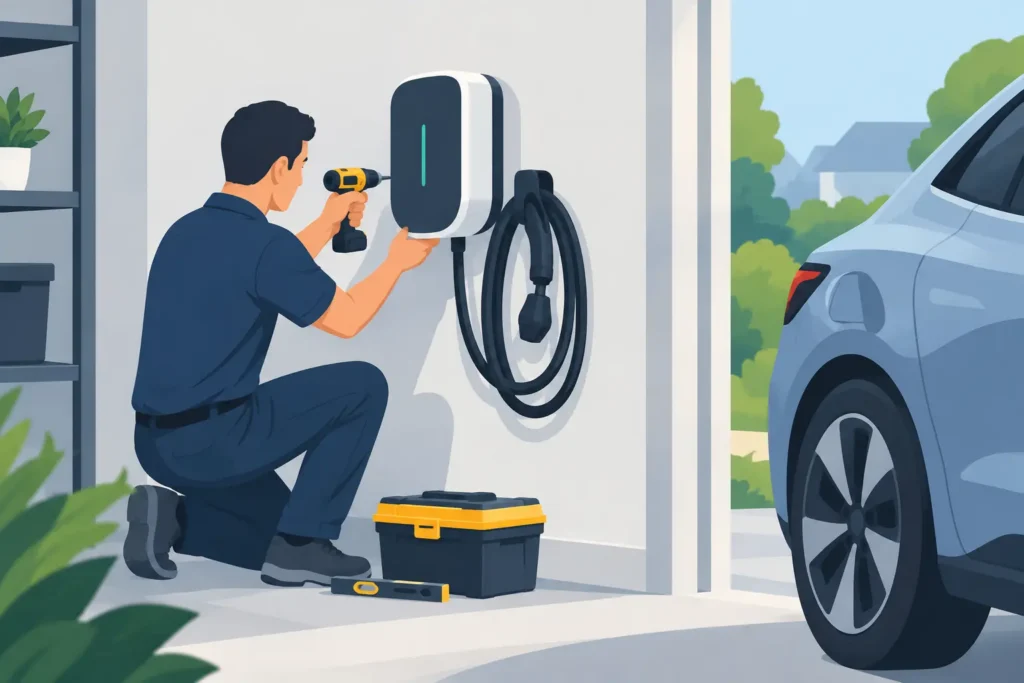
A professional Level 2 installation begins with the electrical panel. An electrician evaluates available capacity, the proposed charger location, the distance from the panel, and the requirements of the charger you plan to use. This determines whether the project needs a new dedicated circuit, a panel upgrade, load management equipment, or a different charger configuration.
Some homes have ample electrical capacity and a nearby panel, making installation straightforward. Others may have older panels, a long wiring run to a detached garage, or major appliances that already place significant demand on the electrical service. In those cases, the best solution may be different from the highest-amperage charger advertised online.
Permits and inspections may also apply. In Los Angeles County, requirements can vary by city and property type, particularly for condos, apartment buildings, and shared parking areas. A properly permitted installation protects the property, helps satisfy insurance and association requirements, and confirms that the system meets applicable electrical codes.
The charger location deserves just as much attention as the circuit. A good placement allows the cable to reach the vehicle port without stretching across walkways, blocking storage, or creating a tripping hazard. For outdoor setups, the equipment and installation should be rated for the environment and positioned for practical daily use.
Level 2 Charging for Condos, Apartments, and Workplaces
The decision is more complex when the charger is not going into a single-family home. Condo residents may need HOA approval, assigned parking coordination, utility-meter planning, and a path for routing electrical service through common areas. Apartment owners and property managers need a plan that works for current residents without making future expansion difficult.
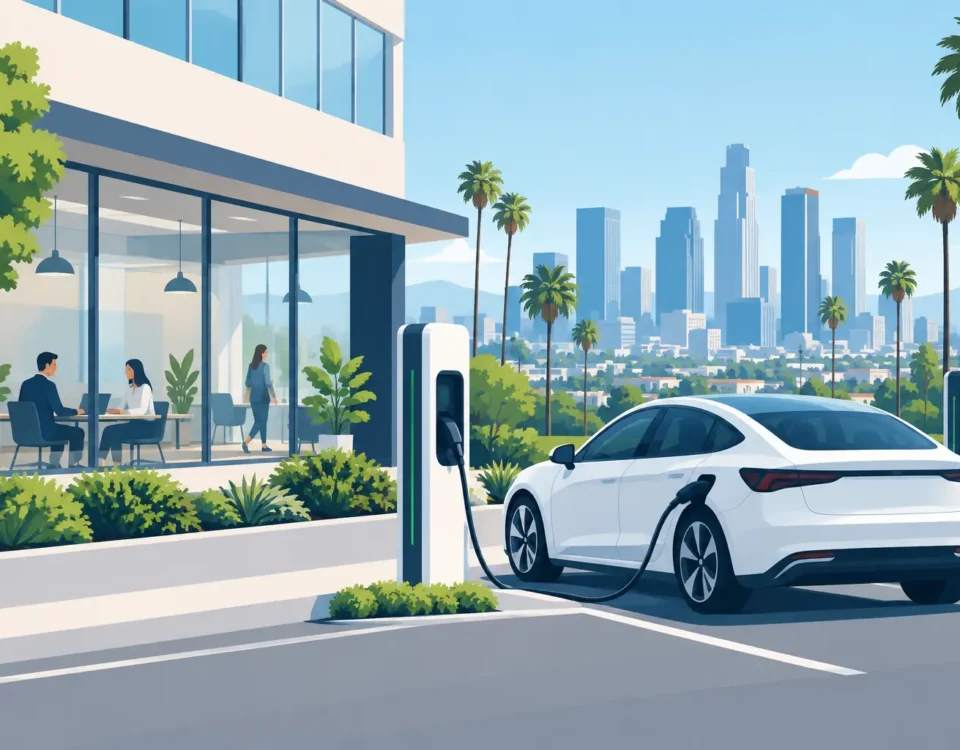
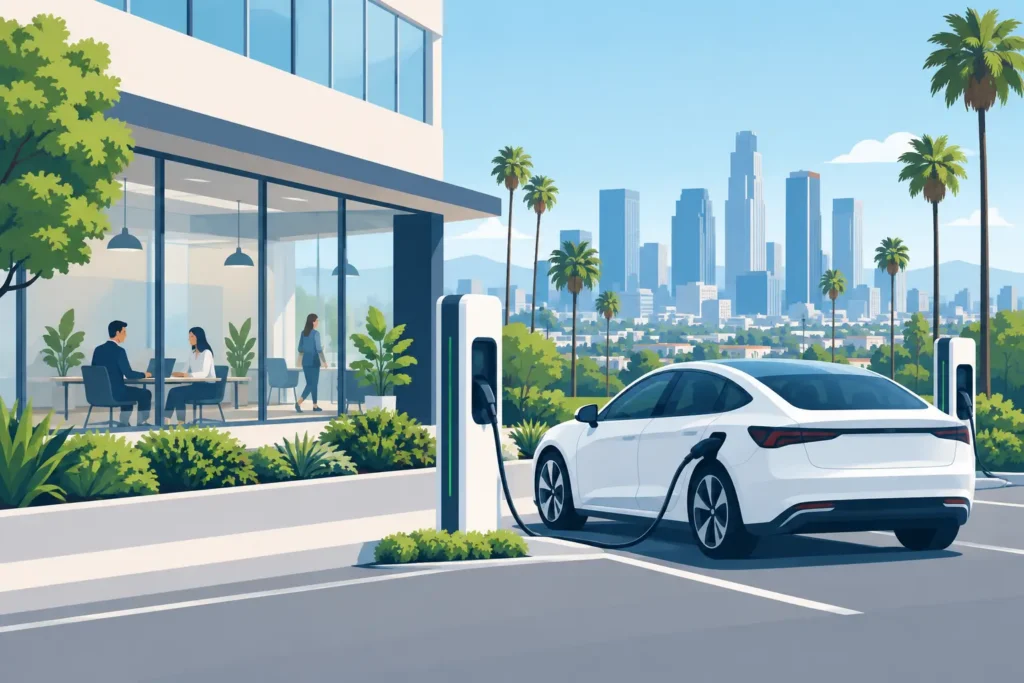
Workplaces and fleets face similar questions at a larger scale. A few chargers may meet immediate demand, but the electrical design should account for growth. Load management can help distribute available power across multiple charging stations, reducing the need for oversized service upgrades in some situations.
For these properties, Level 1 is rarely the best permanent answer. It can create slow turnover, uneven access, and a patchwork of outlet use that is difficult to manage. Purpose-built Level 2 infrastructure provides more control, a better user experience, and a clearer path to adding chargers over time.
Choosing the Right Setup for Your Driving Routine
Start with your actual driving habits, not the maximum charging speed listed on a charger box. Consider your average daily mileage, how many hours the vehicle is parked at home, whether another EV may need the same circuit, and how long you expect to keep the vehicle or property.
If Level 1 restores your typical daily use with time to spare, it may be a sensible short-term or permanent solution. If it leaves you watching the battery percentage, relying on public charging, or limiting your driving plans, Level 2 will likely pay for itself in convenience.
A professional assessment removes the guesswork. Plug-in LA helps EV owners evaluate charger options, electrical capacity, permits, and installation requirements so the completed setup fits the vehicle and the property. The goal is not simply to install the biggest charger. It is to create a safe, reliable charging routine that works every day.
Your EV should be ready when you are. Choose the charging level that gives you confidence when you leave the driveway, not another task to manage before you do.