Why Is a Permit Important?
- EV charger circuit size
- Breaker and conductor sizing
- Electrical panel capacity
- Load calculations
- Grounding and bonding
- Conduit and wiring methods
- Charger location
- Equipment ratings
- Required clearances
- Load-management equipment
An electrical permit helps confirm that the work is reviewed under the applicable electrical and building requirements. Permitting also creates an official record of the electrical work performed at the property.
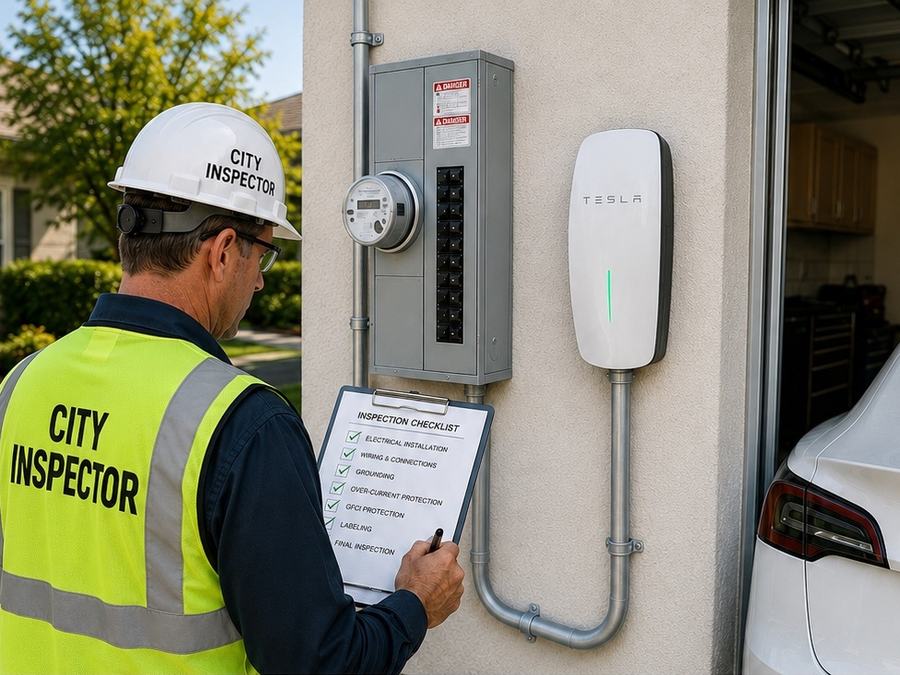
What Happens During the Inspection?
- Electrical panel connections
- Circuit breaker size
- Wiring and conduit
- Grounding
- Charger mounting
- Equipment labeling
- Disconnecting means when required
- Load-management equipment
- General workmanship and safety
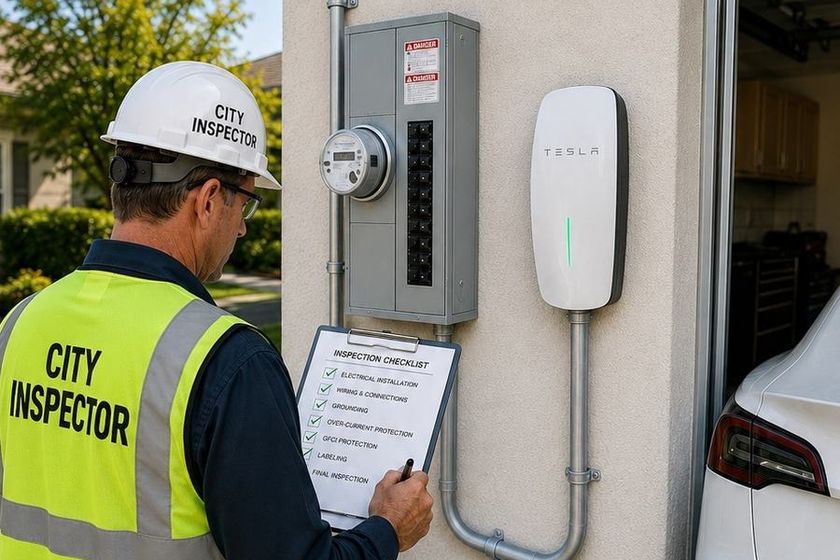
After the installation is complete, a city electrical inspector may visit the property to verify that the work was installed according to the approved permit and applicable code requirements. If corrections are requested, they must typically be completed before final approval.
Do All EV Charger Installations Require a Permit?
- Electrical load calculations
- Panel schedules
- Single-line diagrams
- Utility coordination
- Service planning
- Engineering documentation
- HOA or property-management approval
Requirements vary by city and project. Some jurisdictions have streamlined EV charger permit programs, while others may require additional documentation or review. This is especially common with panel upgrades, multi-unit dwellings, load-management systems, and larger electrical services.
Permits for Panel Upgrades
When an EV charger installation includes a main panel or electrical service upgrade, the permitting process can be more involved.
The project may require coordination between the city, utility company, electrician, and property owner.
Depending on the installation, additional requirements may include meter changes, service equipment approval, grounding upgrades, utility disconnect and reconnect, or service capacity verification.
Planning these requirements early can help reduce delays.
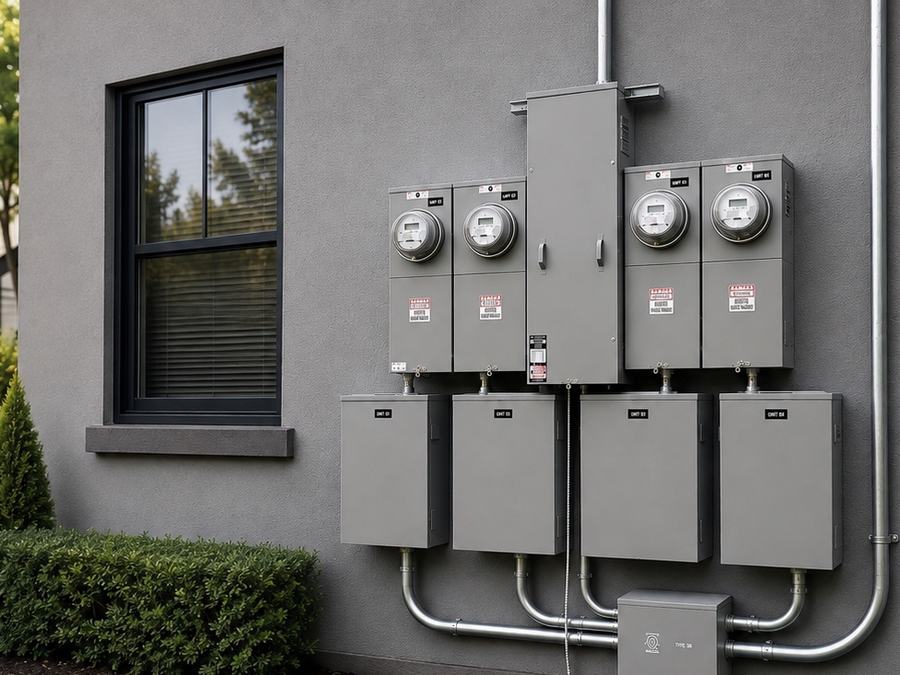
Multi-Unit Properties and EV Charging
- Existing building electrical capacity
- Main switchboard ratings
- Tenant electrical loads
- Existing and proposed EV chargers
- Load sharing or load management
- Dedicated metering
- Future expansion
Apartments, condominiums, and other multi-unit properties can require additional review. A properly planned design can make the approval process much smoother.
Final Approval Matters
Passing the final inspection confirms that the permitted electrical work has been reviewed and approved by the local authority.
This is an important final step for EV charger installations, panel upgrades, and other electrical improvements.
It can also provide valuable documentation for homeowners, property managers, HOAs, and future property transactions.
From Permit to Final Inspection
At Plug In EV Charging Solution, we understand that dealing with permits and inspections can be confusing.
We help manage the electrical permitting process, complete the installation according to approved requirements, and coordinate the final inspection when included in the project.
Our goal is to make the process as simple as possible while ensuring the installation is completed properly.
Permitted. Inspected. Ready to charge.