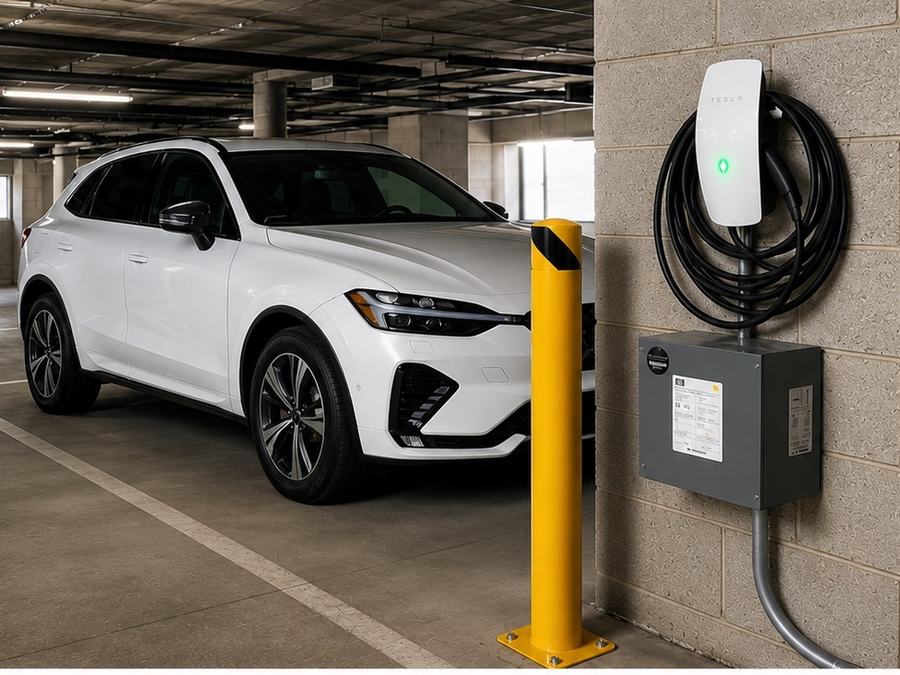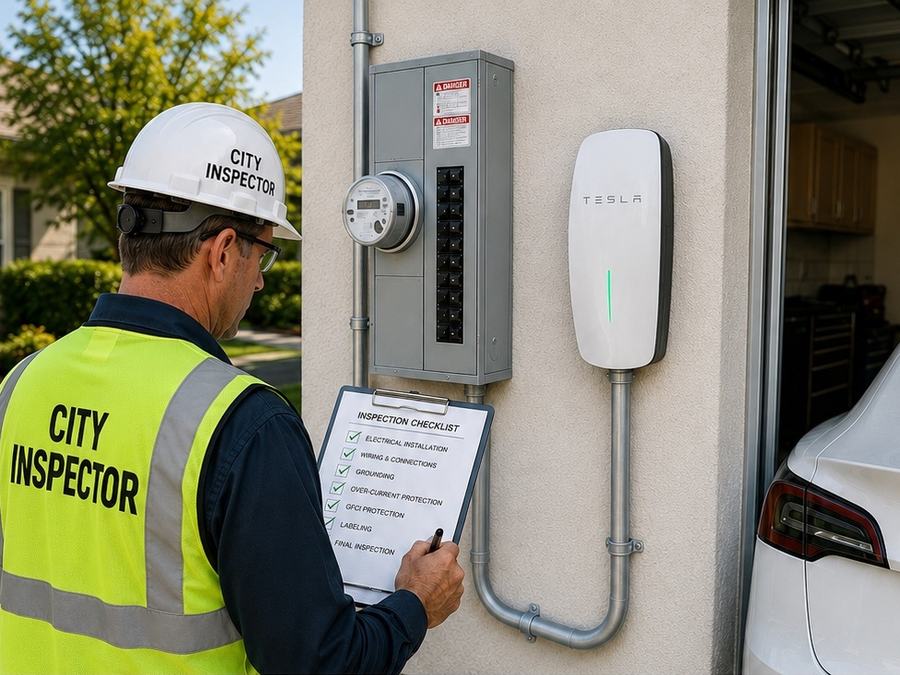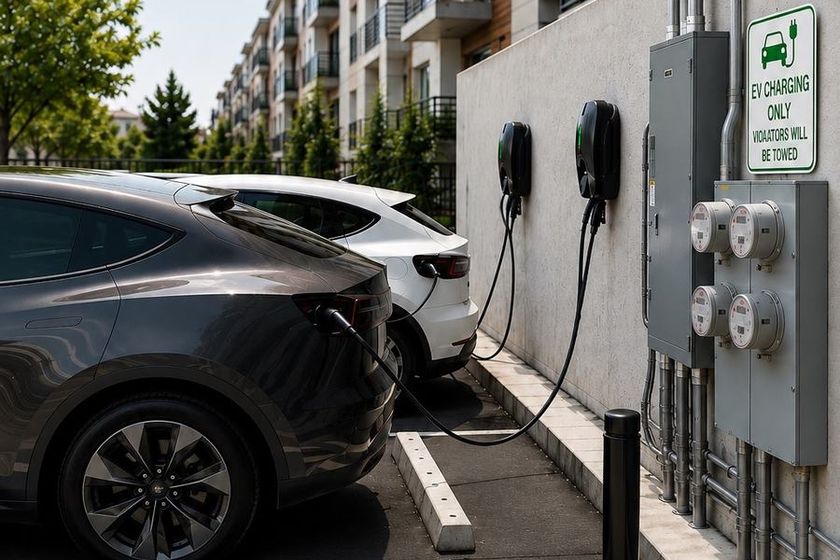
What Makes Multi-Unit EV Charging Different?
- Available building electrical capacity
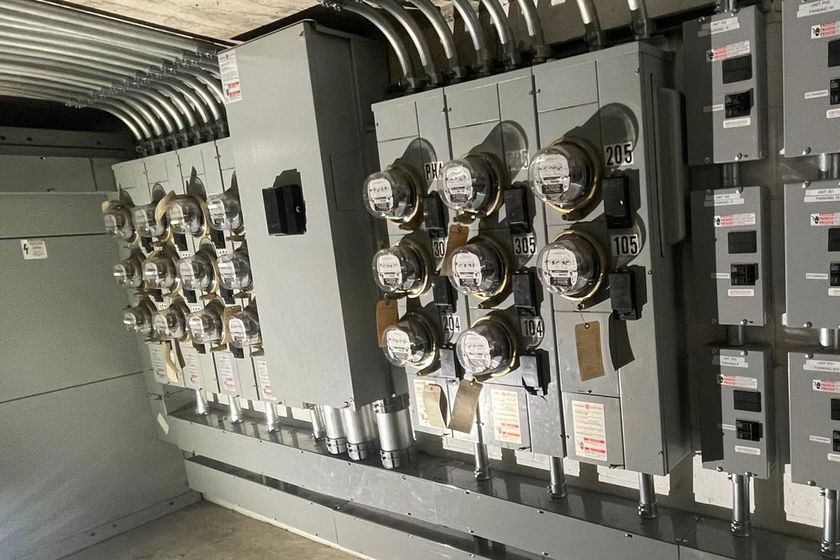
- Existing meter and switchboard configuration
- Assigned parking locations
- Distance from electrical equipment to parking
- Individual tenant billing
- Shared electrical loads
- EV load management
- HOA or property management requirements
- Utility coordination
- Future charger expansion
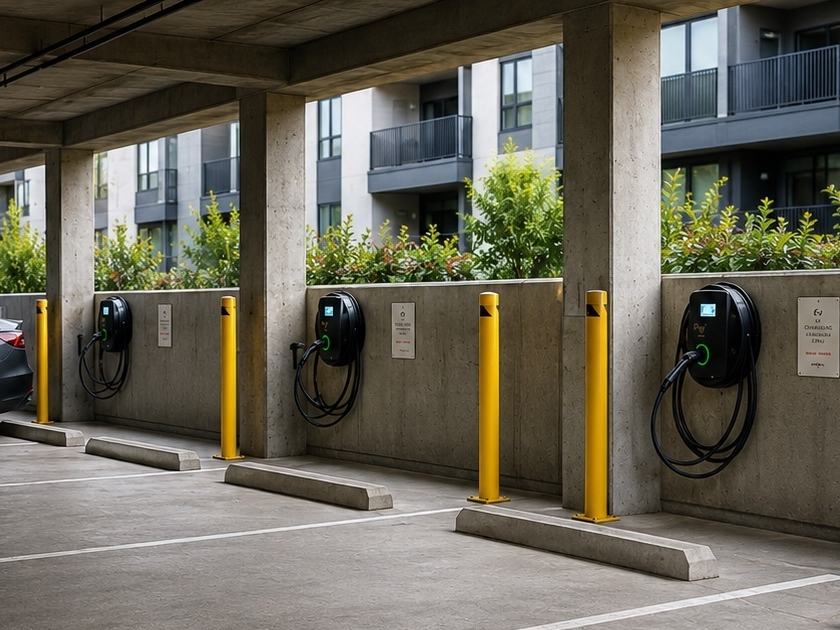
In a multi-unit property, multiple residents may eventually want EV charging. A good system should be designed not only for the first charger, but also for future demand. Proper planning can help avoid expensive changes later.
Individual EV Chargers for Residents
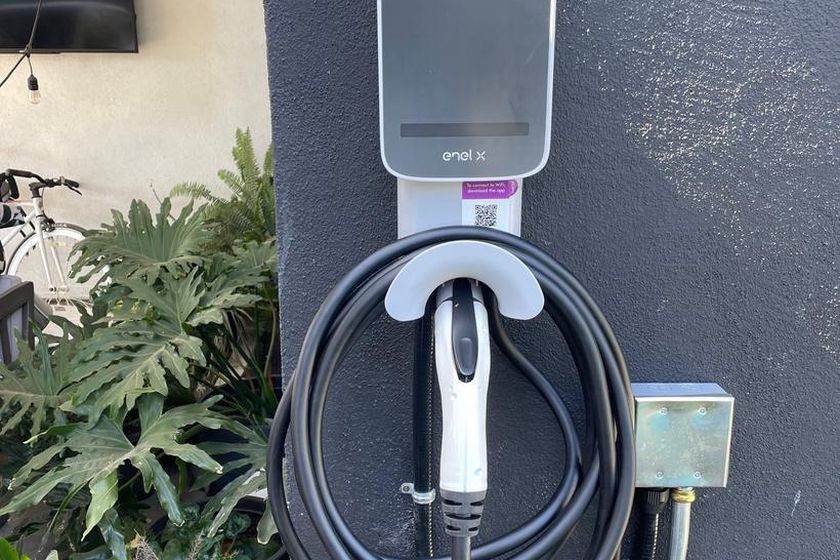
Depending on the property, an EV charger may be connected to an individual resident’s electrical service or to a dedicated EV charging system.
When feasible, connecting a charger to the resident’s own meter can simplify electricity billing because the charging energy is automatically included in that resident’s utility bill.
For other properties, a shared or centrally managed charging system may be the better solution.
The correct design depends on the existing electrical infrastructure and how the property wants to manage charging.
Load Sharing and EV Load Management
One of the biggest challenges in multi-unit EV charging is electrical capacity.
Installing several high-output chargers without proper control can place unnecessary demand on the building’s electrical system.
EV load management can help multiple chargers operate within a defined amount of available power.
Instead of requiring every charger to draw maximum power at the same time, the system can intelligently distribute available capacity between vehicles.
This can make it possible to support more EV chargers while reducing or delaying expensive electrical service upgrades.
Avoiding Unnecessary Service Upgrades
- Load management
- Load sharing
- Controlled charging output
- Individual meter connections
- Dedicated EV meters
- Phased charger installation
A large electrical upgrade may sometimes be necessary, but it should not automatically be the first solution. Before recommending new switchgear, transformers, meter banks, or larger utility service, we evaluate whether the existing electrical infrastructure can support EV charging through these options. The goal is to use the property’s existing power as efficiently as possible.
Planning for Future EV Growth
- Installing larger conduit pathways
- Reserving electrical capacity
- Designing expandable load-management systems
- Planning charger locations
- Preparing electrical rooms and parking areas for additional chargers
A multi-unit EV charging project should be designed with future expansion in mind. Even if only one or two residents need charging today, demand can grow quickly. A scalable design can make future installations faster, cleaner, and more cost-effective.
Permits, HOA, and Utility Coordination
- Property owners
- HOA boards
- Property managers
- Residents
- City inspectors
- Electrical engineers
- Local utilities
Multi-unit EV charging projects may involve several parties. Depending on the project, permits, electrical load calculations, utility approval, engineering documentation, or additional service planning may be required. We help coordinate the electrical scope and identify these requirements early in the process.
A Smarter Way to Bring EV Charging to Your Property
Every multi-unit property is different.
There is no single EV charging solution that works for every apartment building or condominium.
At Plug In EV Charging Solution, we evaluate the existing electrical system, parking configuration, current charging needs, and future growth before recommending a design.
The result is an EV charging system built to serve residents today while preparing the property for tomorrow.
Start with the right design. Expand when you need it.