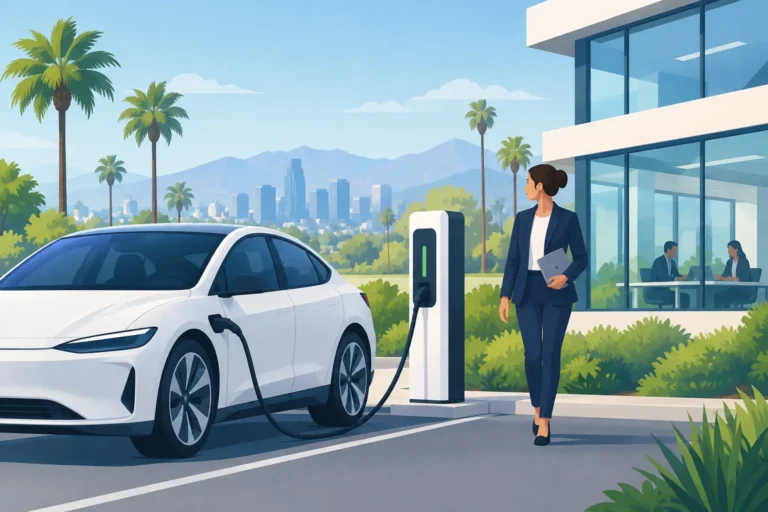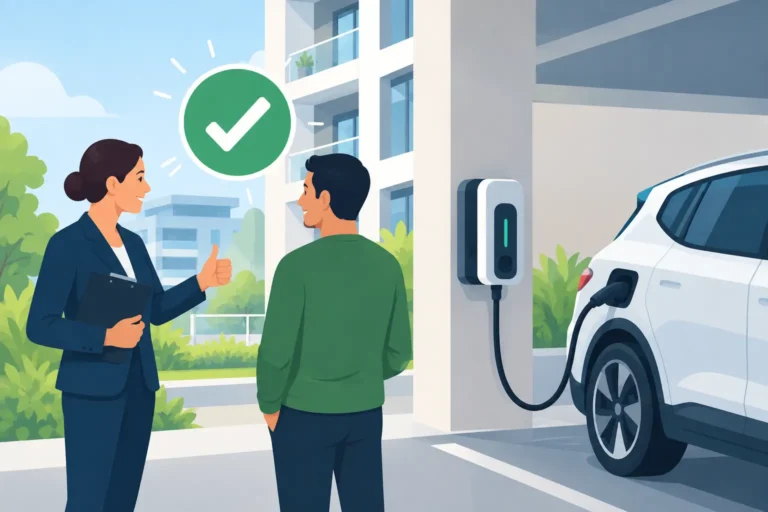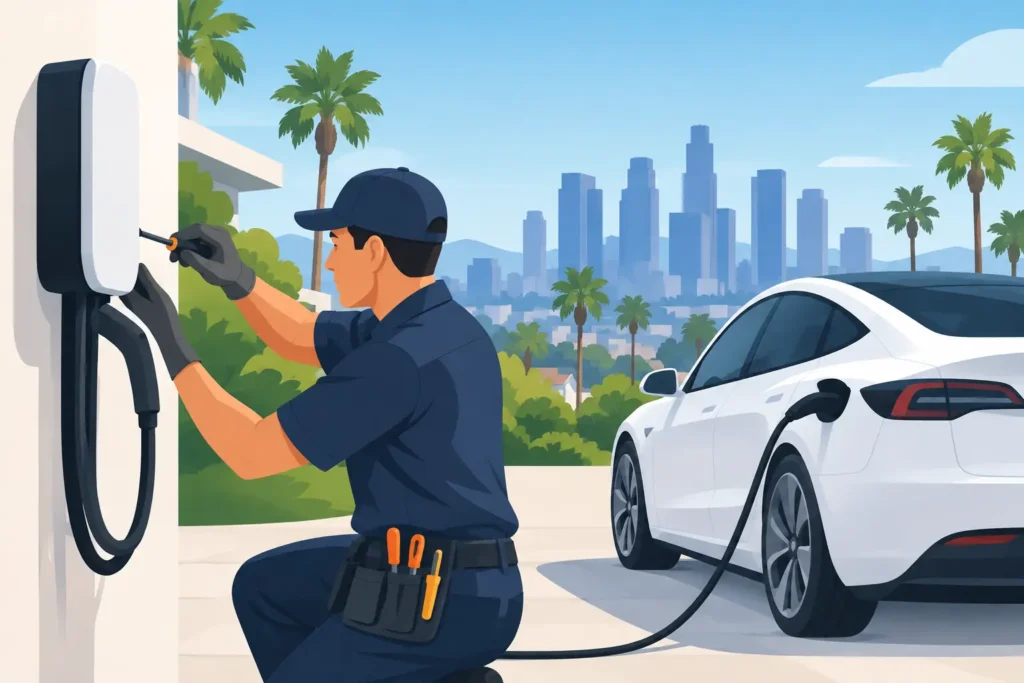
A charger can look simple on the wall, but the work behind it determines whether you get dependable overnight charging or a frustrating series of delays, upgrades, and callbacks. The best Los Angeles EV electricians do more than connect equipment. They assess your electrical system, match the charging setup to your vehicle and daily driving needs, and handle the details that make the installation safe and code-compliant.
For a homeowner, that may mean confirming your panel has room for a Level 2 charger. For a condo board, workplace, or fleet operator, it can mean planning capacity across multiple spaces without creating avoidable costs. Choosing the right specialist early helps keep the project moving and prevents expensive surprises after installation begins.
What the Best Los Angeles EV Electricians Do Differently
EV charging is electrical work, but it is not interchangeable with every small electrical job. A qualified EV electrician understands continuous loads, charging speeds, circuit sizing, load calculations, utility requirements, and the local permitting process. That knowledge matters because a charger may run for hours at a time, often overnight, rather than for a few minutes like many household appliances.
The right contractor starts by asking practical questions. What vehicle do you drive? How many miles do you typically travel each day? Where is the electrical panel in relation to the parking space? Is this a single-family home, condo, apartment building, office, or public-facing property? These answers shape the equipment recommendation, installation path, timeline, and price.
Specialization also matters when your situation is not straightforward. Older homes may need panel upgrades or load management. Detached garages can require a longer trench or conduit run. Multi-unit properties need a plan that works fairly for residents while accounting for shared electrical infrastructure. An experienced EV charging team can explain the trade-offs clearly rather than pushing a one-size-fits-all answer.
Start With the Charging Experience You Want
Most drivers are best served by Level 2 charging at home. A properly installed Level 2 charger can replenish far more range per hour than a standard wall outlet, making it practical to plug in after work and start each morning ready to drive. The exact speed depends on the vehicle, charger, circuit capacity, and electrical service.
That does not mean every property needs the largest charger available. If you drive modest daily mileage and have plenty of time to charge overnight, a lower-amperage setup may be the sensible, more cost-effective choice. If you have multiple EVs, longer commutes, or a business where vehicle uptime is critical, greater capacity may be worth the investment.
A good electrician will help you choose between a hardwired unit and a plug-in outlet setup as well. Hardwiring can offer a clean, dedicated installation and may support higher charging output, depending on the equipment. A receptacle can provide flexibility, but it must be correctly rated, installed, and protected for EV charging use. The best choice depends on your charger, service capacity, future plans, and local code requirements.
Ask for an Assessment, Not a Guess
Fast quotes are valuable, especially when you are eager to charge at home. But fast should still be informed. A quality provider can often gather the key details through photos, video, and a clear set of questions, avoiding an unnecessary site visit for straightforward jobs. When the property needs closer review, they should say so before promising a final scope.
Be ready to share photos of your electrical panel, the area around it, the intended charger location, and the route between the two. Include the panel label if available. This gives the electrician a better view of available breaker space, panel rating, distance, wall surfaces, and any potential obstacles.
Verify Licensing, Insurance, and EV-Specific Experience
You are adding a high-use circuit to your property, so credentials should be easy to confirm. Work with a properly licensed and insured electrical contractor. Licensing is not just a box to check. It indicates that the contractor is authorized to perform the work, while insurance helps protect you if something goes wrong during the project.
Then ask about actual EV charging experience. A contractor who regularly installs chargers for Tesla and other EV brands will be familiar with common configurations, equipment requirements, app-connected chargers, load management options, and the questions inspectors tend to ask. They should be comfortable discussing both residential and commercial installations if your property needs more than one charger.
It is reasonable to ask how they handle permits, inspections, and corrections if an inspector requires a change. The answer should be direct. Professional installers coordinate the work, keep you informed, and do not leave you trying to interpret permit requirements on your own.
Compare Quotes by Scope, Not Just Price
The lowest number on a quote is not always the lowest-cost installation. A vague quote can leave room for change orders once work begins. Clear, upfront pricing is more useful because it tells you what is included and identifies conditions that could affect the final cost.
Review whether the quote covers the dedicated circuit, breaker, wiring, conduit, charger mounting, permit coordination, inspection support, and patching expectations. If a panel upgrade, trenching, long wire run, or service modification may be needed, ask how that is priced and when it will be confirmed.
For commercial and multi-unit sites, the scope should also address future expansion. Installing a single charger without considering the next five can make later work more disruptive and expensive. Sometimes it makes sense to install extra conduit or plan electrical capacity now, even if only a few chargers are activated initially. Other times, a phased approach is the better fit for the budget. The right recommendation depends on demand, parking layout, electrical capacity, and ownership goals.
Four Questions Worth Asking Before You Hire
- Is the proposed circuit and charger capacity appropriate for my vehicle, driving habits, and existing electrical service?
- Will you manage permits and coordinate the inspection process when required?
- What is included in the quoted price, and what property conditions could change it?
- If my panel is near capacity, can you offer practical options such as a panel upgrade or energy management solution?
These questions reveal whether a contractor is planning the complete job or simply pricing a charger mount.
Do Not Overlook Permits and Incentives
Permitting can feel like a delay, but it is part of protecting your property and confirming the work meets applicable electrical and safety requirements. Requirements vary by jurisdiction and project type. A professional EV electrician can determine whether a permit is required, prepare the appropriate documentation, and coordinate the inspection steps.
Rebates and incentives can also affect your decision, particularly for multi-unit housing, workplaces, and larger installations. Programs change, and eligibility can depend on the equipment, location, utility territory, project timing, and whether the work is permitted. Rather than relying on outdated information, choose a provider that can help you understand the administrative requirements before work begins.
Choosing a Partner for Homes, Condos, and Businesses
The best fit is not always the contractor with the biggest list of services. Look for a team that treats EV charging as a core service and can explain the process in plain language. You should know who will install the equipment, when the work can be scheduled, what access is needed, and what happens after the charger is energized.
For homeowners, responsiveness and a clean installation are often the priorities. For condo residents and property managers, coordination is just as important as electrical expertise. Approval requirements, shared panels, assigned parking, metering, and resident communication all need attention. Commercial customers may also need charging policies, access control, payment considerations, and plans for equipment maintenance.
Plug-in LA helps Southern California customers move from charger selection to completed installation with licensed EV charging specialists, clear pricing, and support for the details that can otherwise slow a project down.
A reliable EV charger should make daily driving easier, not add another project to manage. Choose an electrician who can look beyond the equipment, explain your real options, and deliver an installation built for the way you use your property and your vehicle.