How to Calculate EV Load Requirements Safely

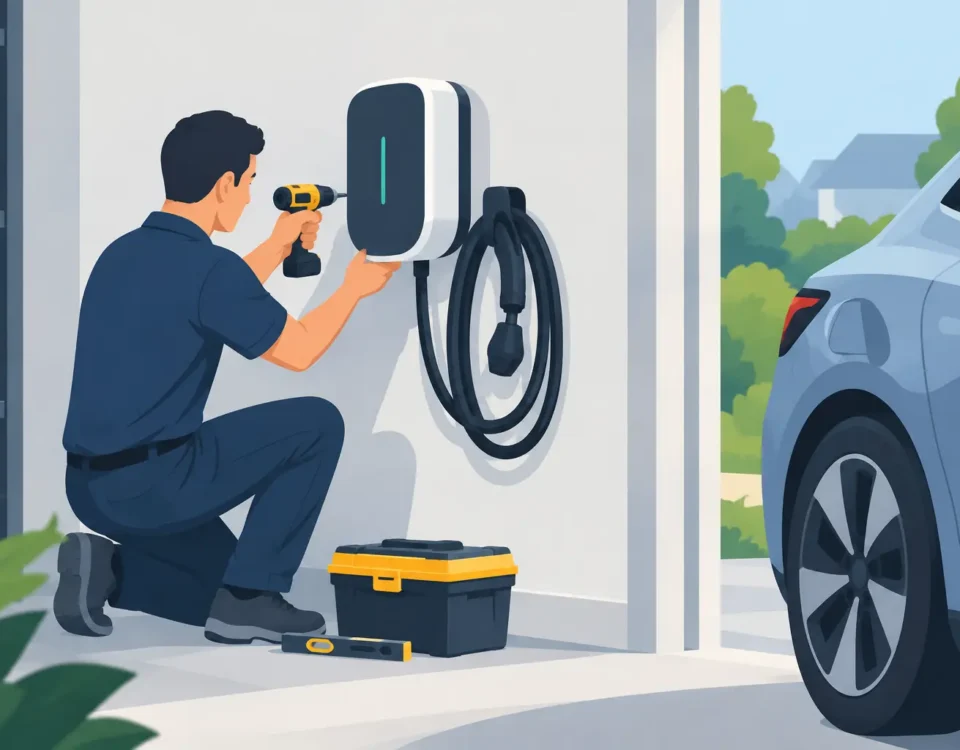
Mounting an EV Charger: What to Know First
September 16, 2026
Condo EV Charging Policy Guide for HOA Boards
September 12, 2026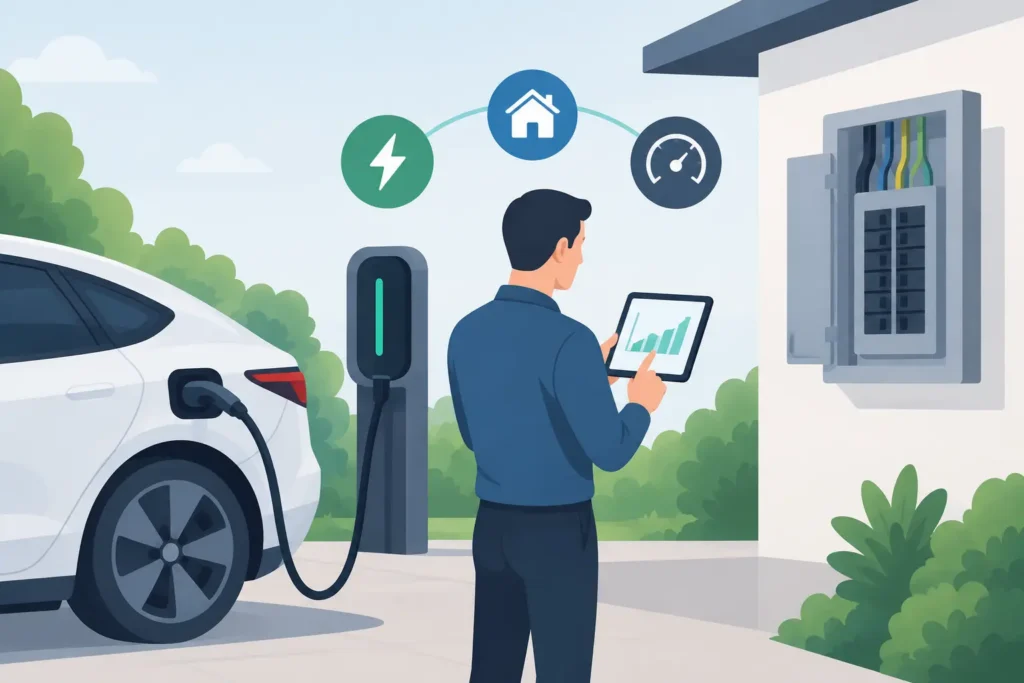
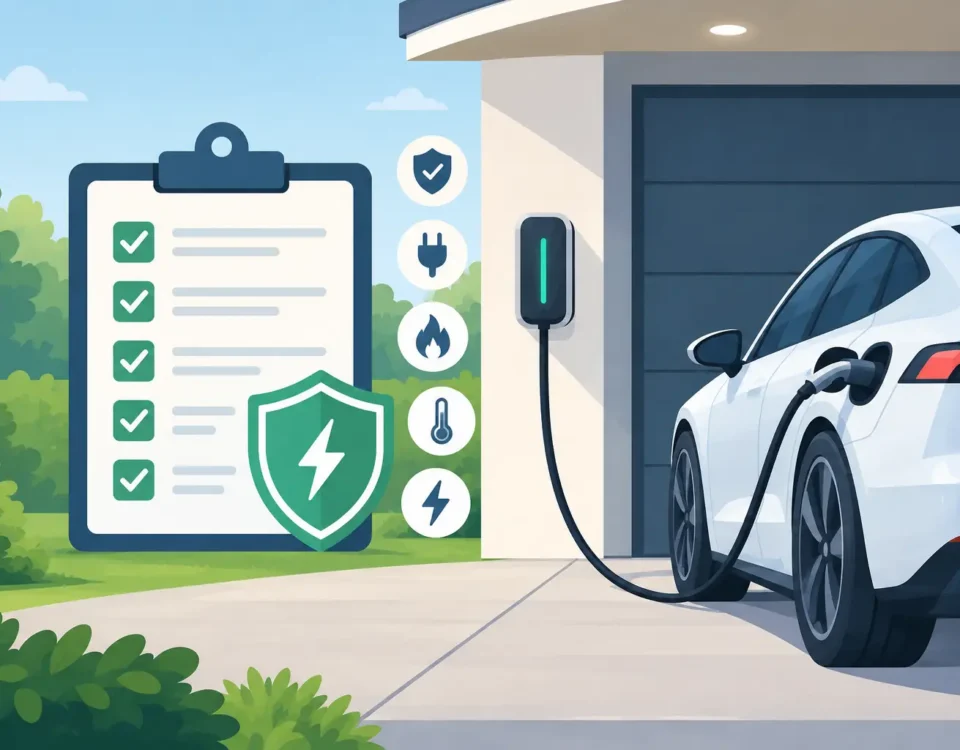
A Level 2 charger can make daily EV ownership dramatically easier, but it also becomes one of the larger electrical loads in a home or building. Before choosing equipment or scheduling work, you need to calculate EV load requirements so the charger is fast enough for your driving needs and safe for the electrical system already in place.
The good news is that this is not a guessing game. A qualified electrician can review the charger, panel, existing demand, and installation path to determine what your property can support. Understanding the basics will help you make better decisions and avoid paying for more charging capacity than you actually need.
Start With Your Daily Charging Need
The right charger size begins with how much energy you need to replace between drives. Many EV drivers do not need the fastest available charger. If your vehicle is parked at home overnight for eight to 12 hours, a moderate Level 2 setup can fully cover most commuting and local driving.
As a simple example, consider a driver who uses 40 miles of range each day. If their EV gets roughly 3 to 4 miles per kilowatt-hour, they may need about 10 to 14 kilowatt-hours overnight. Even a 16-amp Level 2 charger can replace that energy over several hours. A 32-amp or 40-amp charger provides more flexibility for longer commutes, multiple drivers, or shorter charging windows.
Vehicle acceptance rate matters as well. Some EVs can accept 48 amps at Level 2, while others are limited to 32 or 40 amps. Installing a larger circuit than the vehicle can use may not improve charging speed. The best choice balances your vehicle’s capability, your schedule, and available electrical capacity.
Understand Continuous Load Rules
EV charging is treated as a continuous electrical load because it can run for three hours or longer. That changes how the circuit must be sized.
The standard planning rule is straightforward: the circuit must be rated for at least 125% of the charger’s maximum continuous output. Put another way, the charger should use no more than 80% of the circuit breaker rating.
A few common examples make this easier to see:
- A 16-amp charger generally requires a 20-amp circuit.
- A 32-amp charger generally requires a 40-amp circuit.
- A 40-amp charger generally requires a 50-amp circuit.
- A 48-amp charger generally requires a 60-amp circuit.
This is why a charger advertised as “48 amp” is not installed on a 48-amp breaker. The breaker, wiring, disconnecting means when required, and other installation details must all be selected for the full circuit rating.
How to Calculate EV Load Requirements at the Panel
A charger circuit can be correctly sized and still be too much for a property’s existing electrical service. The key question is not simply whether there is an empty breaker space in the panel. The question is whether the panel and service have enough calculated load capacity to add a continuous EV charging load safely.
A residential load calculation considers more than the label on the main breaker. It accounts for general lighting and receptacle load, required small-appliance circuits, laundry circuits, fixed appliances, electric cooking equipment, heating and air conditioning, water heaters, pool equipment, and other significant loads. The calculation applies code-based demand factors because not every appliance runs at full output at the same time.
For EV charging, the charger is added at its full continuous load value. A 48-amp charger on a 240-volt circuit represents 11,520 watts of connected load. That is a meaningful addition, particularly at homes with a 100-amp service, all-electric appliances, central air conditioning, or a pool and spa.
For a simplified planning example, imagine a home with a 200-amp service. A 40-amp charger needs a 50-amp circuit, but that does not automatically mean the home needs a service upgrade. If the formal load calculation shows enough remaining capacity, the installation may be straightforward. If the calculation shows the service is already near its limit, the electrician may recommend a lower-output charger, energy management equipment, a panel upgrade, or a service upgrade.
The same principle applies at condos, apartments, workplaces, and fleet sites, but the analysis can become more involved. Multiple chargers may share a common service, and common-area loads or tenant metering can affect the design.
Panel Rating Is Not the Same as Available Capacity
It is common to see a 200-amp main breaker and assume there is plenty of power for a high-output charger. Sometimes there is. Sometimes there is not.
The main breaker rating describes the maximum service capacity under the system’s design. It does not show how much demand the property already has. Likewise, empty breaker spaces only indicate physical room for a new circuit. They do not prove that the load calculation will support it.
Older homes may have a 100-amp panel, a subpanel with limited feeder capacity, outdated equipment, or insufficient space for a two-pole breaker. Newer homes can also have constraints if they rely on electric heat, induction cooking, heat-pump water heating, pool systems, and other large loads. A site review identifies these conditions before installation day.
Choose the Right Solution When Capacity Is Limited
A limited panel does not always mean the project stops or requires a costly upgrade. There are several practical paths, and the right one depends on your charging habits and property layout.
A lower-amperage Level 2 charger is often the simplest option. Moving from 48 amps to 32 amps still provides substantial overnight charging for many drivers while reducing the additional load on the service.
Load management can also be a smart solution. This equipment monitors demand and temporarily reduces or pauses EV charging when the property approaches its electrical limit. When demand drops, charging resumes. For drivers who charge primarily overnight, this can preserve convenience without immediately expanding the electrical service.
A panel or service upgrade may be the best long-term choice when the property has no practical remaining capacity, when electrical equipment is outdated, or when future plans include additional EVs and electrification projects. It involves more coordination, but it can create a safer foundation for years of increased electrical use.
For multi-unit and commercial sites, smart load sharing is especially valuable. Instead of designing every charger for maximum simultaneous output, a managed system can distribute available power across vehicles. This can support more charging ports without oversizing the service for a peak demand that may rarely occur.
Consider Distance, Wiring, and Installation Conditions
Load requirements are only part of the installation. The distance between the electrical panel and charger location affects wire sizing, labor, and potentially voltage drop. A charger mounted near the panel is usually simpler than one installed across a large property, through finished walls, underground, or in a detached garage.
The installation environment matters too. Outdoor chargers need properly rated equipment and weather-appropriate installation methods. Garage installations need a location that protects the equipment while keeping the cable convenient to reach the vehicle’s charge port. For condos and shared parking structures, routing, metering, access approvals, and fire-rated construction may influence the final design.
Permits are another reason to plan correctly from the beginning. Electrical permits and inspections help confirm that the circuit, equipment, and installation meet applicable requirements. A professional installer can coordinate these details rather than leaving you to interpret electrical rules or manage inspections alone.
What to Have Ready for an Accurate Quote
A fast quote is easier when an installer can see the electrical panel, its main breaker rating, available breaker spaces, and the proposed charging location. Clear photos of the panel label, the area around the panel, and the parking location are often useful. It also helps to know your vehicle model, charger preference if you have one, and whether you expect to add another EV in the next few years.
For commercial properties, gather information about the number of planned chargers, parking layout, operating hours, existing electrical drawings if available, and whether charging will be employee-only, tenant-focused, fleet-based, or public-facing. These details help determine whether individual dedicated circuits or a managed charging approach makes more sense.
Plug-in LA helps property owners move from these questions to a clear installation plan with licensed electrical expertise, straightforward pricing, and support through the required steps.
The most useful charger is not necessarily the largest one on the market. It is the one that fits your vehicle, daily routine, and electrical capacity – installed correctly so you can plug in at night and start each morning ready to drive.