A charger can be installed, energized, and ready for drivers – yet still create a serious access problem. ADA EV parking requirements affect more than the parking stall itself. The route from the accessible entrance, the charger controls, cable reach, signage, and required accessible parking count all need to work together.
For property managers, workplace administrators, and commercial property owners, the practical goal is straightforward: add EV charging without reducing access for people with disabilities or creating a costly correction after inspection. The right design depends on the site, the number of chargers, and the codes enforced by the local authority having jurisdiction.
What ADA EV parking requirements cover
The federal ADA Standards do not provide one simple nationwide formula that says exactly how many EV charging spaces every property must have. EV charging is newer than many ADA parking provisions, so the analysis usually starts with the existing accessibility rules for parking, accessible routes, operable parts, and communication features.
That does not mean EV charger accessibility is optional. Public-facing commercial sites, government facilities, and common areas at many multifamily properties must provide accessible features where the ADA applies. Workplaces also need to consider accessibility, including reasonable accommodations for employees and access for visitors.
In California, the building code can add more specific requirements for electric vehicle charging stations. A project may also trigger local plan review, permit requirements, or accessibility upgrades connected to an alteration. The applicable rules can vary based on whether a charger serves the public, residents, employees, a fleet, or a private single-family home.
For that reason, a homeowner installing one charger in a private garage has a very different compliance picture than an apartment operator adding twenty chargers in a shared lot.
Keep required accessible parking available
The first question is not, “Where can the charger fit?” It is, “What accessible parking must remain available after this work is complete?”
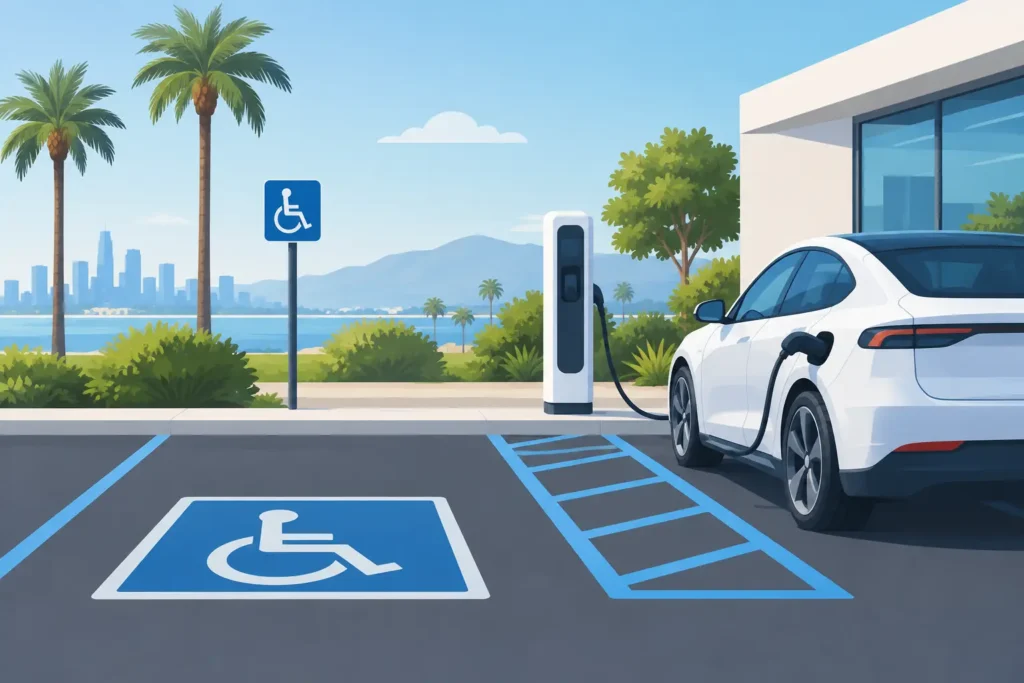
Accessible parking requirements are generally based on the total number of spaces in a parking facility. Those requirements include a required number of accessible spaces and, depending on the parking count, van-accessible spaces. Each accessible space needs an appropriately sized access aisle connected to an accessible route.
When EV charging is added, owners should avoid converting all accessible spaces into charging-only spaces without a complete parking review. A visitor with a disability who does not drive an EV must still be able to use the required accessible parking. Likewise, placing chargers in ordinary stalls does not eliminate the need to preserve the required accessible spaces elsewhere in the lot.
A well-planned site often provides an accessible EV charging space while maintaining the overall required accessible parking supply. In some cases, the best location is near an accessible entrance. In others, electrical capacity, circulation patterns, curb ramps, and available space make a different area more practical. The design should be evaluated as a full site layout, not as an isolated charger installation.
The accessible route matters as much as the stall
An accessible EV space needs a usable path to the building entrance or destination. That route should not force a driver or passenger to travel behind parked vehicles, cross unsafe traffic areas, climb a curb, or navigate a steep or uneven surface.
Charging equipment and cable management also matter. A cable stretched across a sidewalk, access aisle, or path of travel can become a trip hazard. Bollards, wheel stops, utility cabinets, and pedestal-mounted chargers must be positioned so they protect equipment without narrowing the accessible route.
This is one reason a quick parking-lot sketch is not enough. A licensed installer can identify electrical options, but the final layout should also account for accessibility clearances, site circulation, and the requirements identified during permitting.
Make the charger usable from a wheelchair
Accessible parking alone does not make an EV charging station accessible. The driver must be able to reach and operate the equipment.
ADA principles for operable parts generally apply to features such as the connector holster, payment terminal, touchscreen, activation button, emergency stop, and cable release. Controls should be located within an accessible reach range and usable without tight grasping, pinching, or twisting of the wrist. A clear floor area is also needed so a person using a wheelchair can pull alongside or approach the equipment.
The charging connector deserves special attention. Some cables are heavy, short, or difficult to manage. A charger placed too far from the accessible vehicle position may technically energize a car but remain difficult for a driver with limited mobility to use. Cable length, holster height, connector weight, and the vehicle’s charge-port location all influence the result.
For public chargers that require payment or account access, the user interface should be considered early. If the screen, card reader, QR code, or customer-support instructions are mounted out of reach, the station may not provide equal access. Features such as readable instructions, tactile controls where appropriate, and support for accessible payment workflows can improve usability beyond the minimum physical layout.
Signage, markings, and enforcement prevent conflicts
Clear signs and pavement markings help keep accessible EV charging spaces available for the people they are designed to serve. The exact sign type, location, wording, and mounting height can be governed by California accessibility provisions and local rules, so those details should be confirmed before installation.
The larger operational question is how the property will manage the space. An accessible EV charger can create competing demands: an EV driver may need to charge, while a disabled visitor may need accessible parking but not charging. Poorly worded signs or unclear policies can create frustration for both groups.
Property teams should establish an operating policy before chargers go live. Consider whether the station is for residents, employees, customers, or the public; whether charging is time-limited; and who can address an improperly parked vehicle. For a multifamily property, the policy should align with resident parking assignments and any reasonable accommodation process.
California projects need a code-specific review
California accessibility rules are often more detailed than federal ADA requirements, and local jurisdictions may apply their own permitting and plan-review procedures. The California Building Code, local building department requirements, fire regulations, and utility requirements can all affect an EV charging project.
This matters especially for apartments, condos, workplaces, retail centers, hotels, medical offices, and public parking facilities. Adding chargers may involve more than a new circuit. The project may affect parking geometry, accessible paths of travel, electrical service upgrades, signage, trenching, and accessibility provisions associated with alterations.
Existing sites can be the most complicated. A newer garage may have room to add chargers with minimal disruption, while an older lot may have narrow stalls, slopes, missing curb ramps, or electrical equipment located far from practical charging areas. Sometimes the lowest-cost electrical location is not the best accessible location. A good design weighs both factors before construction starts.
A practical process for compliant EV charging
Start by documenting the property as it exists today. Count the parking spaces, identify accessible and van-accessible spaces, locate curb ramps and accessible routes, and note the electrical service and panel capacity. Photos and accurate measurements help uncover issues early.
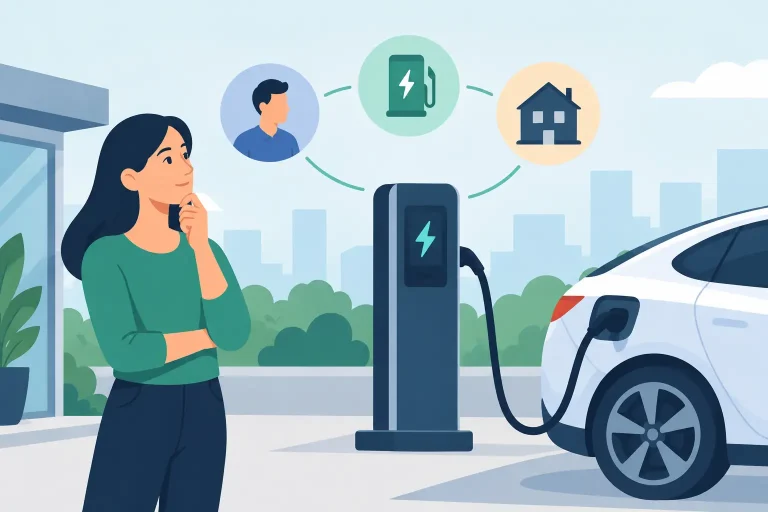
Next, identify the charger users. A resident-only installation may be planned differently from a public retail charger or an employee charging program. Determine the likely charger quantity, charging level, hours of access, payment method, and whether future expansion is expected.
Then, develop the parking and equipment layout together. Do not select a charger location solely because it is closest to a panel. Confirm the accessible route, clear floor space, cable reach, protective bollards, parking access aisle, and signage before the equipment is ordered.
Finally, submit the project for the permits and reviews that apply to the site. For larger commercial and multifamily projects, coordination between the electrical contractor, property team, designer, and local building department can prevent expensive field changes.
Common mistakes that create avoidable rework
The most common issue is treating an accessible EV charger as just another standard charging stall with a blue sign. Accessibility involves the entire customer journey, from entering the lot to operating the connector and reaching the destination.
Other frequent mistakes include blocking an access aisle with a charger pedestal or bollard, allowing a cable to cross a pedestrian path, placing payment controls too high, and removing required accessible parking without replacing it correctly. Another costly error is installing for current demand only, then discovering that the conduit route or panel capacity makes future accessible expansion difficult.
Planning for future chargers is usually less disruptive when it happens during the initial electrical work. Even if a property installs only a few active stations now, a smart infrastructure plan can reserve space, electrical capacity, and accessible locations for the next phase.
When to bring in an EV charging professional
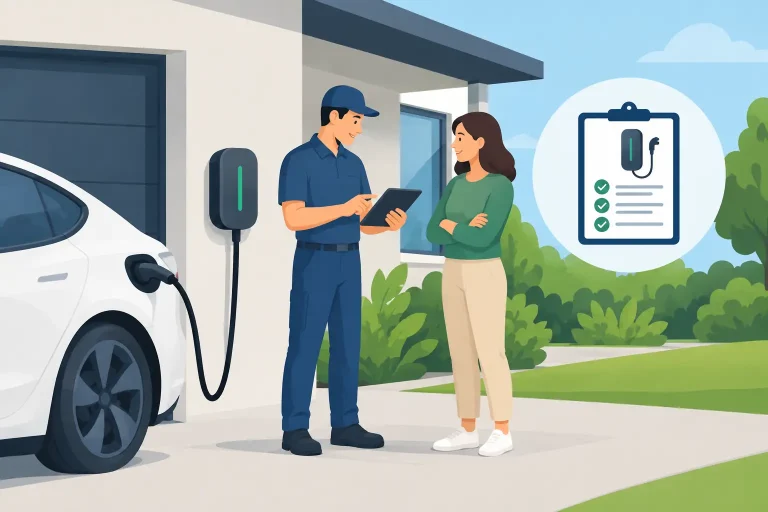
A qualified EV charging contractor can assess panel capacity, recommend the right charging equipment, map practical installation routes, and coordinate the electrical scope. For commercial or multifamily sites, accessibility review should be part of that conversation from the beginning, not a last-minute item after equipment is selected.
Plug-in LA helps Southern California property owners move from site assessment to installed charging with licensed electrical work and practical guidance through the process. For projects with public access, shared parking, or complex site conditions, early coordination is the simplest way to protect your budget and give every driver a dependable place to charge.
The best EV charging projects make access feel ordinary: a driver can park, connect, charge, and continue on their way without navigating obstacles or asking for assistance. That is the standard worth designing for.