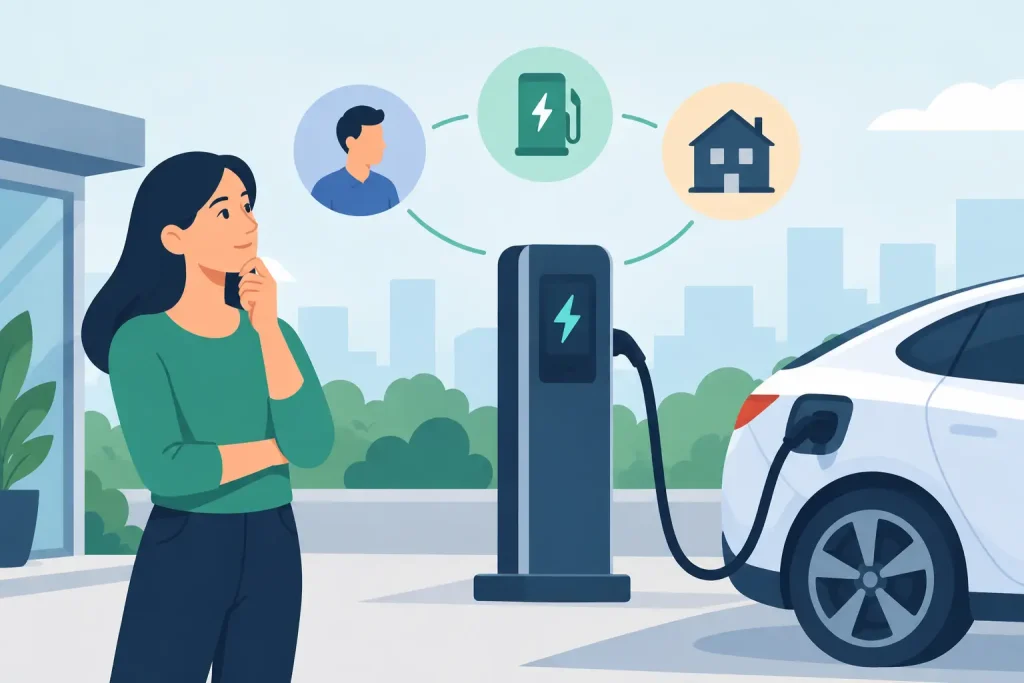
The question of who pays charger electricity sounds simple until a vehicle is plugged in at a condo garage, office lot, or shared commercial property. The short answer is that the party responsible for the electric meter usually pays the utility bill first. But the person or organization that ultimately covers the charging cost can be the driver, homeowner, landlord, employer, property owner, or a combination of them.
A clear plan before installation prevents awkward reimbursement conversations later. It also helps property owners choose the right charger features, metering setup, and electrical design from the start.
Who pays charger electricity at home?
For a single-family home, the homeowner pays. Your EV charger draws power through your home’s electrical panel, and that electricity appears on the same utility bill as your lights, appliances, and air conditioning. There is usually no separate bill from the charger itself.
The cost depends on three things: how much energy the vehicle needs, your electricity rate, and when you charge. EV energy use is measured in kilowatt-hours, or kWh. If your car needs 60 kWh to replenish a low battery and your electricity rate is 25 cents per kWh, that charging session costs about $15 before considering small charging losses.
For many Southern California EV owners, charging overnight can be less expensive than charging during peak afternoon or early-evening periods. Time-of-use utility plans may offer lower overnight rates, but the best plan depends on your household’s total energy usage. A rate that works well for an EV household may not be the best fit if your home uses significant electricity at other times.
The charger does not normally need its own utility meter at a single-family home. However, a smart charger can track charging sessions and energy use, which is helpful for budgeting, business reimbursement, or separating EV costs within a household.
Apartments and condos: the answer depends on the meter
In multi-unit housing, the meter configuration determines much of the answer. If the charger connects to a resident’s individual meter, that resident pays for the electricity through their own utility bill. This is often the cleanest arrangement because it avoids ongoing reimbursement or billing administration.
If the charger is connected to a common-area meter, the homeowners association, landlord, or property manager receives the utility bill. The property then needs a fair way to recover the driver’s charging costs if that is the intended policy. Options include a charger with user access controls and energy reporting, a separate submetering arrangement, or a flat monthly fee.
A flat fee is easy to administer, but it can become unfair when residents have very different driving habits. A resident who drives a few miles per week should not necessarily pay the same amount as someone who charges a large-battery EV every night. Usage-based billing is generally more accurate, especially at properties with multiple drivers.
There are trade-offs. Smart charging systems can provide excellent visibility and controlled access, but they may involve software or network fees. A simpler setup may cost less upfront but require more manual management. The right approach depends on the number of chargers, the property’s electrical capacity, and whether charging is an amenity, a reimbursable service, or a revenue source.
For condo boards and apartment owners, the written policy matters as much as the hardware. It should explain who may use the charger, who pays for electricity, how rates are calculated, what happens if utility prices change, and who is responsible for maintenance. Establishing these terms early protects both residents and the property.
Workplace charging: employer-paid, driver-paid, or shared
Workplace charging can be a valuable employee benefit, but there is no one required payment model. Some employers provide free charging and absorb the electricity cost as part of their benefits package. This can be a practical recruiting and retention perk, particularly when employees spend most of the day on-site.
Other employers ask drivers to pay for the energy they use. Chargers with user accounts, RFID access, or app-based payments can assign costs to individual drivers while keeping charging available only to authorized users. This model can reduce the employer’s ongoing expense and discourage drivers from leaving fully charged vehicles plugged in all day.
A shared-cost model is also common. An employer might provide a limited amount of free charging, charge a lower-than-public rate, or set a price that covers electricity plus a portion of operating costs. If a company wants to recover costs, it should decide whether the price reflects only energy use or also includes networking, maintenance, parking, and demand-related utility charges.
Employers should also consider tax, payroll, and employee-benefit implications with their accounting or tax professional. The administrative details can vary based on how charging is offered and billed.
Public and customer-facing chargers
At public charging sites, the site owner or charging operator pays the utility first because the equipment is connected to that property’s electrical service. Drivers may then pay the operator through a per-kWh price, a per-minute price, a session fee, a parking fee, or a mix of these charges.
That price is not always a direct pass-through of the local utility rate. A public charging operator may need to cover equipment, installation, network management, payment processing, maintenance, customer support, insurance, and site-host agreements. Fast charging can have higher infrastructure and utility costs than slower Level 2 charging, which is one reason public pricing can vary widely.
Some retailers, hotels, and restaurants offer complimentary charging to attract customers. In those cases, the business pays as part of its customer experience budget. Free charging can be effective, but access rules should be clear. A charger intended for customers should not become all-day parking for nearby commuters.
Electricity is only one part of EV charging cost
It helps to separate the electricity bill from the cost of making charging available. Electricity is the recurring energy expense. Installation, permits, panel upgrades, equipment, networking, maintenance, and repairs are separate costs.
This distinction is especially important for a landlord, workplace, or commercial site deciding what drivers should pay. Charging only for electricity may support an amenity-first approach. Adding an operating fee may be reasonable when the property needs to maintain equipment and manage access. What matters is that the pricing method is explained clearly and applied consistently.
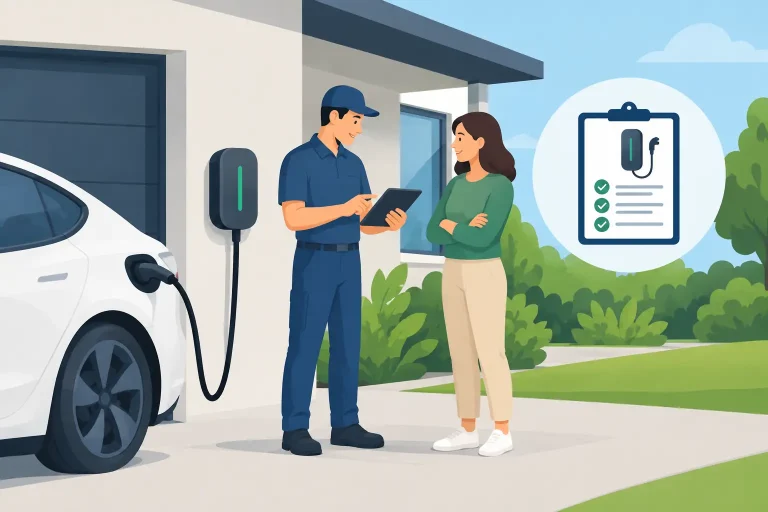
At a home, the same distinction affects budgeting. A Level 2 charger installation is an upfront property improvement, while electricity is an ongoing vehicle operating cost. The installation cost depends on panel capacity, charger location, wiring distance, permit requirements, and whether electrical upgrades are needed. A professional site assessment or detailed remote quote can identify those factors before work begins.
How to choose a fair payment setup
Start with the electrical meter. Ask which account will receive the utility bill when the charger operates. Next, decide whether that account holder intends to absorb the cost, seek reimbursement, or charge users directly.
Then match the equipment to the policy. A homeowner who simply wants reliable overnight charging may only need a properly installed Level 2 charger. A property with several users may benefit from controlled access, usage reporting, or a system designed to allocate costs by driver.
Finally, plan for growth. Installing one charger at an apartment complex or office may be straightforward, but demand often increases once other residents or employees purchase EVs. Load management, electrical capacity planning, and conduit provisions can make future expansion far less disruptive and expensive.
Get the installation and billing plan aligned
The best charging setup is not just the fastest charger that fits on the wall. It is a safe, permitted installation that matches how the property will use, manage, and pay for electricity. For homeowners, that usually means simple charging on the household bill. For shared properties, it means agreeing on the payment policy before the first vehicle plugs in.
Plug-in LA helps Los Angeles property owners and EV drivers plan charging installations around real-world electrical capacity, equipment needs, permits, and future use. When the charger design and payment plan are considered together, everyone knows what to expect each time the vehicle starts charging.