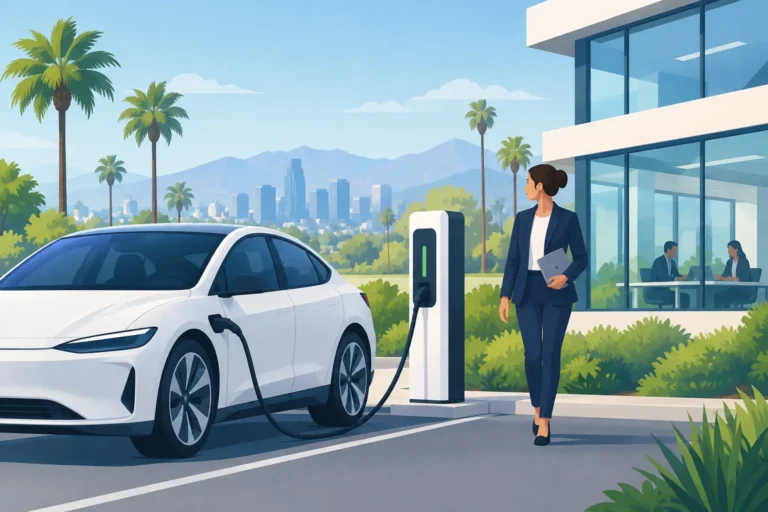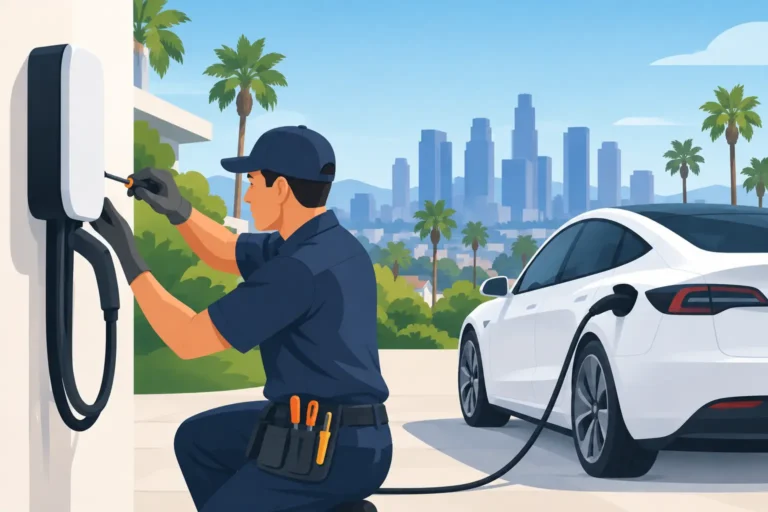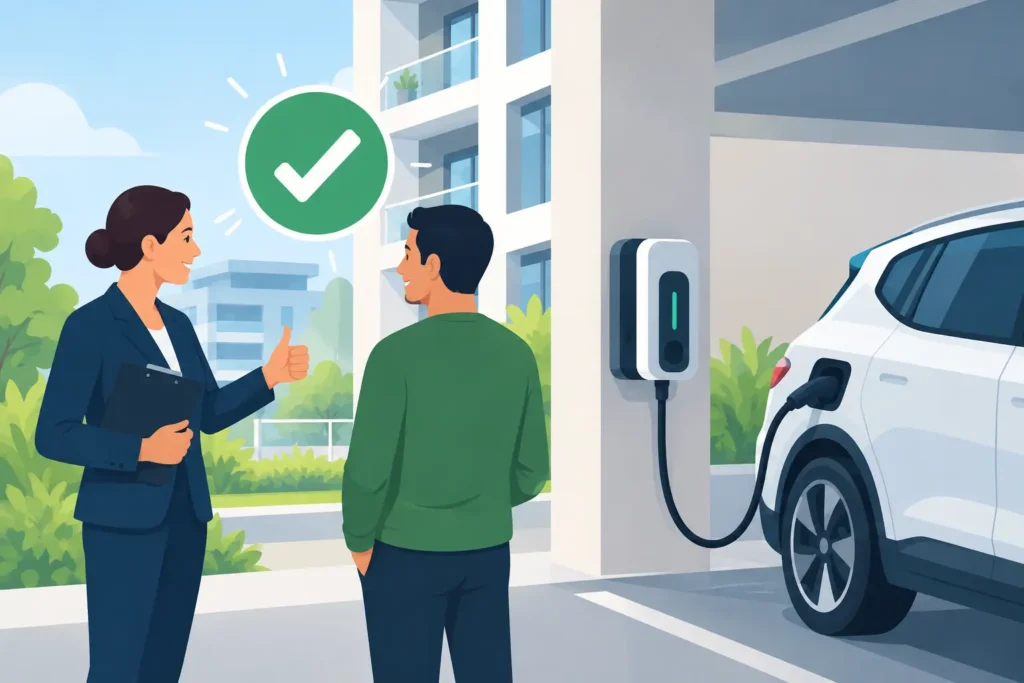
A parking space can look like the easiest place to charge an EV – until the space is in a condo garage. Condo EV charger approvals involve more than choosing a charger and hiring an electrician. You may need agreement from your HOA or board, a review of building electrical capacity, a permit, insurance documentation, and a clear plan for who pays for electricity and future maintenance.
The good news is that a well-prepared request is much easier for a board or property manager to approve. The goal is not to overwhelm the association with technical details. It is to show that the installation is safe, professionally designed, code-compliant, and fair to the rest of the community.
Why condo EV charger approvals take longer
A single-family homeowner typically controls the garage, electrical panel, and parking area. In a condo, those spaces may be individually owned, designated as exclusive-use common area, or fully controlled by the association. That distinction affects who can authorize work and what rules apply.
Boards also have legitimate concerns. They need to protect the building’s electrical system, prevent unplanned modifications to common areas, maintain fire and safety standards, and avoid creating an unfair cost for residents who do not drive EVs. A request that answers those concerns up front is far more likely to move forward without repeated revisions.
In California, condo owners may have rights related to installing EV charging stations, but those rights do not eliminate reasonable association requirements. The HOA can still require an architectural application, licensed installation, permits, insurance, indemnity agreements, and payment for costs connected to the owner’s charger. Building documents and the specific installation location matter, so it is wise to review the CC&Rs and work from the association’s written process.
Start with the parking-space question
Before selecting equipment, confirm exactly how your parking space is classified. Is it deeded to you? Is it an assigned exclusive-use space? Is it part of a shared garage or common parking area? Your property manager can usually provide the relevant parking plan and explain the association’s application requirements.
This step determines the approval path. A charger mounted inside your privately owned garage may be relatively straightforward, although a permit and electrical review can still be required. A charger serving an assigned stall in a shared subterranean garage often requires more coordination because conduit may run through common areas and connect to a common electrical room.
It also helps to identify the nearest practical power source. The shortest route is not always the best route. An installer must consider panel capacity, access for conduit, fire-rated walls, utility rooms, and whether the chosen route interferes with building operations or other residents’ parking.
Build a request the board can evaluate
A vague request such as “I want to install a Tesla charger” creates work for the board. A complete proposal gives decision-makers enough information to assess the project without guessing. It should explain where the charger will be installed, how power will reach it, the charging output, and whether the work affects common property.
A professional installation proposal can also identify the electrical load calculation, equipment specifications, permit scope, and estimated installation cost. For many condo projects, the board will want confirmation that the work will be completed by a licensed and insured electrical contractor, not a handyman or a resident’s friend.
Include a simple statement of responsibility. If the charger is for one owner’s use, the association will usually expect that owner to cover installation, electricity, maintenance, repair, removal if necessary, and damage caused by the equipment or installation. Clear responsibility is reassuring because it prevents a personal charging project from becoming an open-ended HOA expense.
Electricity billing needs a clear answer
Electricity is often the issue that slows an otherwise simple installation. If the charger can connect to the owner’s meter, billing is direct and easy to explain. If it must draw from a common panel, the project may need submeters, networked charging controls, or a reimbursement arrangement approved by the association.
For one or two chargers, a submeter or a dedicated billing plan may be enough. For a larger building, the better long-term answer may be a managed charging system that tracks usage and limits demand. The right choice depends on the existing electrical infrastructure, the number of residents likely to request charging, and the building’s budget.
Electrical capacity is the real technical review
A Level 2 charger can add meaningful electrical demand. That does not mean the building needs a service upgrade for every EV, but capacity must be evaluated rather than assumed. Older buildings, especially those with full panels or limited available load, may require a different approach.
An electrician can review the panel, feeder capacity, proposed circuit, and charging configuration. Sometimes the answer is a dedicated circuit at the requested charging rate. In other cases, a lower-amperage charger or load-management device can allow safe charging without major electrical upgrades. Charging overnight at a lower rate can still meet most daily driving needs.
For associations, this is an important trade-off. Approving the largest possible charger for the first resident may seem generous, but it can use capacity that several future chargers could share. A scalable plan may include capacity limits, load balancing, conduit pathways, and design standards for future installations. That planning costs more at the beginning, yet it can prevent expensive rework later.
Permits, insurance, and building access
Most permanent EV charger installations require an electrical permit from the local authority having jurisdiction. The permit process helps confirm that the wiring, breaker size, grounding, equipment location, and safety protections meet code. Final inspection provides the association and owner with a documented record that the work was completed correctly.
Your HOA may also require certificates of insurance, contractor licensing information, a signed indemnity agreement, or proof of permits before work begins. These requests are common, particularly when work occurs in common garages, electrical rooms, or shared drive aisles.
Logistics matter as much as paperwork. A contractor may need access to electrical rooms, parking closures during conduit installation, elevator or gate access, and coordination with onsite management. Establishing these details before the scheduled date keeps a one-day installation from turning into several delayed visits.
Common reasons applications are delayed
Most delays are preventable. They usually happen when the application does not identify the power source, provides no plan for electricity reimbursement, overlooks a needed permit, or fails to address restoration of common areas after construction. Another common issue is choosing equipment before confirming what the building can support.
Avoid treating the board as an obstacle. Board members are often volunteers managing risk for the entire community. A concise, complete package makes it easier for them to say yes and gives the property manager a clear record to retain.
If the association has no EV policy, your request can help start a productive conversation. Ask whether the board would consider an interim approval for your installation while it develops broader rules for future residents. This can be more practical than waiting for a full-building charging program when you need a home charging solution now.
A smoother path from request to charging
The most efficient sequence is to review the HOA requirements, confirm parking ownership or use rights, obtain a site-specific electrical proposal, and submit the full package before ordering equipment. Once approval is in place, the installer can coordinate permits, access, installation, and inspection.
For Los Angeles-area condo owners, working with an EV-focused electrical contractor can reduce the back-and-forth because the proposal is built around the questions associations actually ask. Plug-in LA can help clarify charger options, electrical requirements, and the documentation needed to move a condo project forward.
A condo charger is not just a convenience upgrade. It is a long-term improvement to how you use your home. Bring your board a practical plan, give them confidence that the building is protected, and approval becomes a manageable step toward charging where you park.