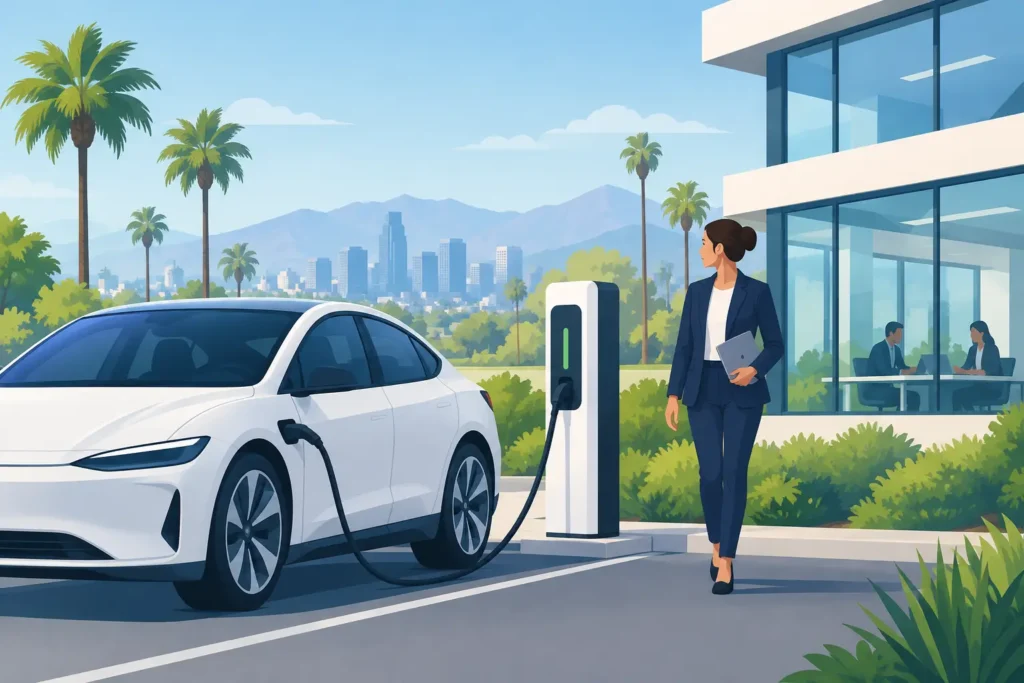
A workplace charger is no longer just a parking-lot perk. For employees who drive electric, reliable charging can shape where they choose to work – especially when their commute exceeds what overnight home charging can comfortably cover. This workplace EV charging FAQ answers the practical questions employers, property managers, and facilities teams ask before moving forward.
Why install EV charging at a workplace?
Workplace charging can help attract and retain employees, support company sustainability goals, and make an existing parking area more useful. It can also be a practical amenity for employees who live in apartments, condos, or other homes where installing a personal charger is difficult.
The value depends on the workplace. A company with many commuters may prioritize enough charging capacity for daily use. An office with hybrid schedules may need only a few shared chargers. Retail, hospitality, and medical sites may want chargers that serve visitors as well as staff. The right plan starts with how long vehicles typically park, who will use the stations, and how access should work.
What type of charger does a workplace need?
Most workplaces are best served by Level 2 charging. These chargers use 240-volt power and can add meaningful range during a typical workday. For an employee parked for six to eight hours, Level 2 charging is usually more practical and cost-effective than installing DC fast charging.
DC fast chargers deliver much faster charging but require substantially more electrical capacity, specialized equipment, and a larger budget. They can make sense for fleets, public-facing locations with short visits, or businesses where vehicles must return to service quickly. They are not automatically the best choice simply because they charge faster.
Charger output also matters. A higher-powered Level 2 unit may benefit vehicles that can accept it, but several moderately powered chargers may serve more employees than one or two high-output stations. A qualified site assessment can match charger capacity to the building’s electrical system and actual parking behavior.
Workplace EV charging FAQ: How many ports should we install?
Start with anticipated demand, not a guess based solely on headcount. Consider how many employees currently drive EVs, how many have said they are likely to purchase one, the number of parking spaces, and whether chargers will be shared with visitors or fleet vehicles.
For a smaller office, two to four charging ports may be a sensible starting point. Larger campuses may need more, but the best approach is often to install infrastructure that can expand later. That may include running conduit, reserving electrical capacity, or selecting a charging management platform that can support additional stations.
Planning for expansion can reduce disruption and cost when demand grows. It also prevents the common problem of installing a few chargers that quickly become oversubscribed.
Should every EV driver get a dedicated charger?
Usually, no. Dedicated chargers can work for assigned company vehicles or executive parking, but shared charging is more efficient for most employee programs. Smart chargers can use schedules, time limits, notifications, or pricing to encourage drivers to move their cars when charging is complete.
The goal is fair access, not necessarily a charger at every space. Clear expectations matter as much as the hardware.
Can the building’s existing electrical panel support chargers?
Maybe, but this must be confirmed before equipment is selected. EV charging adds a continuous electrical load, and an older building, busy commercial kitchen, medical office, or property with heavy HVAC use may have limited available capacity.
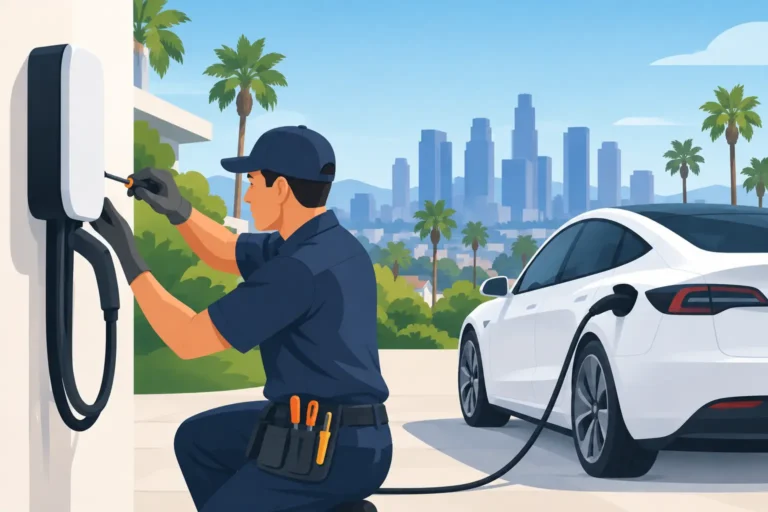
A licensed electrician reviews the existing service, panels, loads, distance to parking, and feasible routing for wiring. In some cases, the site can support several Level 2 chargers with no major upgrade. In others, the project may require a panel upgrade, a new subpanel, load management equipment, or coordination with the utility.
Load management can be especially useful. It allows chargers to share available power dynamically rather than drawing their maximum output at the same time. This can help a workplace install more charging ports without immediately increasing service capacity. The trade-off is that charging speeds can vary when many vehicles are connected, which is often acceptable for employees parked for much of the day.
Do employers need permits for workplace EV charging?
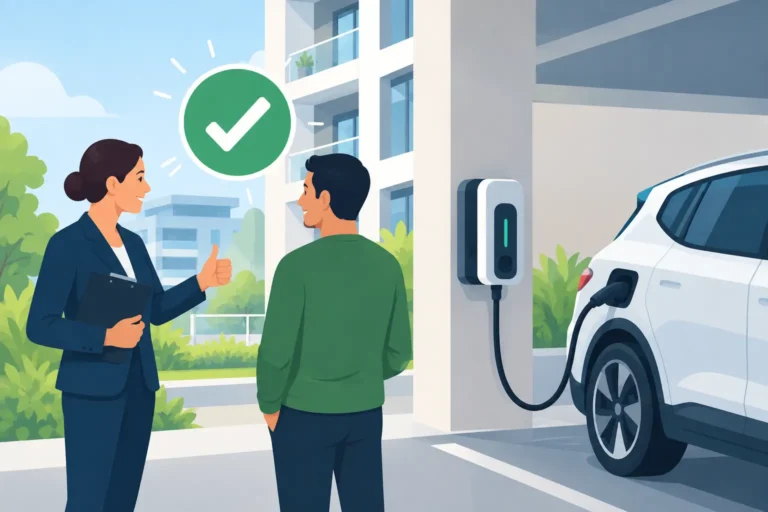
In most cases, yes. Commercial EV charger installations generally require electrical permits, and requirements can vary by city and property type. Multi-tenant buildings may also require coordination with the landlord, property owner, HOA, or management company.
Permitting is not paperwork to skip. It helps ensure the equipment, wiring, overcurrent protection, signage, and accessibility considerations are handled properly. It also protects the business by documenting that the installation meets applicable code requirements.
An experienced EV charging installer can coordinate the permit process, prepare the required documentation, and arrange inspections. For Los Angeles County workplaces, local experience can reduce avoidable delays because municipal requirements and utility processes are not always identical from one jurisdiction to the next.
Should employees pay to charge at work?
There is no one right policy. Some employers provide free charging as an employee benefit. Others set a per-kilowatt-hour rate, charge by session, or use pricing only after a vehicle has finished charging to discourage all-day parking.
Free charging is simple and can be a meaningful benefit, but it may create demand problems as EV adoption increases. Paid charging can recover electricity and network costs, yet the pricing should be easy to understand and reasonable for employees. Many workplaces begin with free or low-cost charging, then revisit the policy once usage data is available.
Before setting a price, decide who will administer the program and how costs will be tracked. Networked chargers can provide session data, user access controls, and payment features. Basic non-networked chargers cost less upfront but offer fewer management tools.
What is the difference between networked and non-networked chargers?
A networked charger connects to software through Wi-Fi, cellular service, or Ethernet. It can allow administrators to monitor usage, manage access, set pricing, receive maintenance alerts, and balance power across multiple chargers.
A non-networked charger is simpler. It may be a good fit for a small workplace that offers free charging to a limited group and does not need reporting or payment features. It is typically less expensive, though someone still needs to manage access and address misuse if demand grows.
For a commercial property with multiple users, visitor access, or a need to bill for charging, networked equipment is often worth the added cost. The choice should reflect operational needs, not just the charger purchase price.
How do we prevent chargers from being blocked or misused?
A charger only helps when drivers can reach it. Designate EV charging spaces with clear signs and pavement markings, then communicate the rules before the stations go live. State whether the spaces are for active charging only, whether vehicles must move after a set time, and what happens when a vehicle remains parked after charging ends.
A simple policy can address most problems. It should cover employee eligibility, guest access, charging fees, hours of use, maximum session duration, and a contact person for questions. If the workplace has more demand than ports, a reservation process or rotating schedule may be appropriate.
Physical layout matters too. Chargers should be positioned so cables can reach vehicles without becoming a trip hazard or crossing driving lanes. Good planning makes the system easier to use and easier to manage.
What does workplace EV charging cost?
Costs vary widely because the charger itself is only one part of the project. The number of ports, electrical capacity, distance from the panel, trenching, wall or pedestal mounting, networking, permitting, and panel upgrades can all affect the total.
A nearby wall-mounted charger on a building with available capacity may be relatively straightforward. Chargers located across a large parking lot, or a site requiring a service upgrade, can involve considerably more work. That is why a transparent quote should address the complete installation scope rather than presenting only the equipment price.
Incentives or utility programs may be available, but eligibility, deadlines, and funding levels can change. They should be treated as a potential savings opportunity, not the foundation of a project budget. Plug-in LA can help commercial customers evaluate the installation path and handle the electrical work with licensed, insured professionals.
How long does an installation take?
The physical installation may take a day for a straightforward small project or longer for multi-charger sites with extensive electrical work. The full timeline can be affected by design decisions, equipment availability, landlord approvals, permits, utility coordination, and inspection scheduling.
The fastest projects are usually the ones that answer key questions early: who owns the parking area, where power is available, which users need access, and whether expansion is planned. A clear scope before equipment is ordered helps avoid expensive changes later.
Workplace charging works best when it is treated as an ongoing amenity rather than a one-time purchase. Start with a plan that fits current demand, leave room to grow, and give employees clear rules they can follow. That creates a dependable benefit without turning facilities management into a daily charging dispute.