A Level 2 charger can look like a simple wall-mounted upgrade, but the paperwork behind it protects your property, electrical system, and future resale value. The right charger installation documents show that the work was designed for the site, approved where required, and completed safely by qualified professionals.
For a single-family home, the paperwork may be relatively straightforward. For a condo, apartment community, workplace, or fleet site, it can involve property approvals, electrical plans, utility coordination, and rebate records. The exact requirements depend on the charger, your existing electrical capacity, and the rules that apply to your property.
Why charger installation documents matter
Documentation is not busywork. It creates a clear record of what was installed, where the power comes from, and whether the installation meets local electrical and building requirements. That record can matter when you sell a home, manage a commercial property, add more chargers later, or need service on the equipment.
Permits and inspections also help catch issues before they become expensive. An EV charger is a continuous electrical load. If the panel, wiring, breaker, or load calculation is not properly matched to the charger, the installation may be unsafe or fail inspection.
For property managers and business owners, documentation is especially valuable because several people may be involved over the life of the project. Clear files make it easier to verify responsibilities, maintain equipment, submit incentive applications, and plan future expansion without starting from scratch.
The documents most charger projects require
Not every project needs every document. A plug-in charger on an existing dedicated circuit is different from a hardwired 48-amp charger that requires a panel upgrade. Still, most professional installations include some combination of the records below.
Installation quote and scope of work
A detailed quote is often the first document in the project file. It should identify the charger or charging circuit being installed, the expected electrical work, the installation location, and any assumptions that affect price.
A useful scope also calls out potential variables. For example, a quote may be based on an available panel space, a certain wire route, or a standard wall mount location. If the electrical panel needs an upgrade, trenching is required, or the charger location changes, the scope should be updated before work moves forward.
Upfront documentation helps customers compare proposals fairly. A low initial number is not necessarily the better value if it leaves out permit handling, load calculations, patching expectations, or required equipment.
Electrical load calculation
An electrical load calculation determines whether the existing service and panel can support the added charging load. This is one of the most important technical records for a Level 2 installation, particularly when installing a higher-output charger.
The calculation considers the home or building’s existing electrical demand along with the planned EV charging circuit. It may show that your current panel has adequate capacity. In other cases, it may point to load management equipment, a subpanel, a service upgrade, or a lower charging amperage as the practical solution.
More charging power is not always the right answer. A charger set up for 32 amps may meet a household’s overnight charging needs without requiring costly electrical upgrades. The best approach depends on how far you drive, how long the vehicle is parked, and what the property can safely support.
Permit application and electrical plans
Many jurisdictions require an electrical permit for a hardwired EV charger or a new 240-volt circuit. The permit application typically identifies the property, contractor, scope of work, and electrical equipment involved.
Some projects also require a simple electrical plan or single-line diagram. This document shows how the charger connects to the electrical system, including the panel, breaker, wire size, and disconnecting means when applicable. Larger commercial and multi-unit projects may need more detailed site plans, parking layouts, ADA considerations, equipment specifications, and engineering review.
Requirements vary by city and by project scope. In Los Angeles County, permitting rules can differ between incorporated cities and unincorporated areas. A contractor familiar with EV charging work can identify the applicable authority and prepare the documentation that fits the job rather than treating every installation the same.
Homeowners association or property owner approval
If you live in a condo, townhome, or managed community, association approval may be needed before the charger is installed. The association may want to review the installation location, conduit route, meter connection, insurance requirements, and restoration plan for common areas.
The same applies to tenants and commercial properties. A landlord or building owner may need to approve work that affects electrical rooms, parking structures, exterior walls, or common electrical service. Getting written approval early prevents delays after equipment has been ordered.
For multi-unit properties, the documentation should clearly address who owns the charger, who pays for electricity, and who is responsible for future maintenance. A charger connected to a resident’s meter is handled differently from a shared amenity charger or a networked system billed through a management platform.
Utility forms and service upgrade records
A standard residential charger often does not require direct utility involvement. However, utility coordination may be necessary when the project includes a service upgrade, new meter equipment, demand management, or certain incentive programs.
Utility documents can include service applications, meter spot approvals, load data, and final release records. These steps may extend the project timeline, so they should be addressed before scheduling work that depends on upgraded service capacity.
For commercial sites, utility planning becomes more significant as charger counts and power levels increase. A few workplace chargers may work within existing capacity, while a larger fleet or public charging project can require transformer upgrades or a new electrical service. Early documentation helps reveal those constraints before construction begins.
Product specifications and equipment records
Keep the charger manual, specification sheet, warranty information, and serial number after installation. These records are useful when configuring smart charging features, registering the warranty, troubleshooting a fault, or replacing equipment later.
For installed electrical components, retain records for breakers, load management devices, pedestals, network hardware, and any disconnects. Commercial property teams should also keep the final equipment schedule and manufacturer contact information in the building’s maintenance file.
A professional installer should use equipment that is appropriate for the intended environment. Indoor and outdoor locations, shared garages, coastal exposure, public access, and vehicle impact risks can all affect the right equipment and mounting method.
Inspection approval and final closeout documents
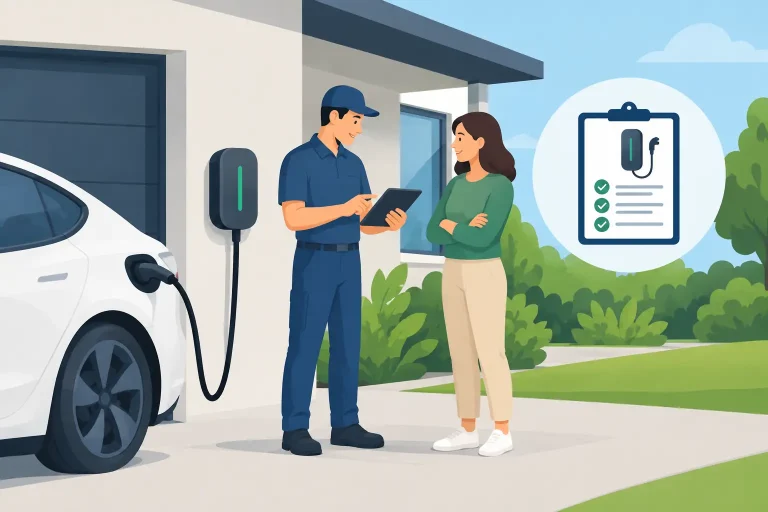
After permitted work is complete, the jurisdiction may inspect the installation. The inspector generally checks the circuit, wiring method, breaker sizing, grounding, working clearances, charger placement, and other applicable code requirements.
The final approval or signed-off permit is a key document to save. It demonstrates that the completed work passed the required inspection. Along with it, keep the final invoice, warranty details, photos of the finished installation, and any updated electrical drawings.
For a larger project, closeout documents may also include as-built plans. These reflect what was actually installed, which is not always identical to the original design. As-builts are particularly helpful when adding chargers years later or when a new property manager takes over.
Documents for rebates and incentives
Rebate programs can reduce charger installation costs, but they often have strict documentation rules. Programs may require proof of purchase, contractor invoices, charger model information, permit records, photographs, proof of property ownership or tenancy, and proof that the charger is operational.
Do not assume you can apply after the job is complete. Some programs require pre-approval, use of eligible equipment, or installation by a licensed contractor. Commercial and multi-unit incentives may also require utilization data, public access commitments, or a minimum operating period.
Keep digital copies of every document in one labeled folder. Include the application confirmation, correspondence, receipts, inspection sign-off, and final incentive decision. A missing invoice or unreadable serial number can slow down an otherwise valid application.
A simpler way to prepare
Before requesting installation, gather the charger model if you have chosen one, photos of the electrical panel and proposed parking location, and any HOA or landlord contact information. If you are managing a commercial site, add a recent utility bill, site plan, and information about expected driver use.
From there, the right installer can determine what your project needs and handle the process in the proper order. Plug-in LA helps customers move from a fast quote to professional installation with clear guidance on permits, electrical requirements, and project documentation.
Save the final file even after your charger is working perfectly. It is a small step that makes future maintenance, expansion, property transactions, and incentive questions much easier to handle.