What Is Actually Available
Most of the money comes from the utility, not the state, and it changes through the year.
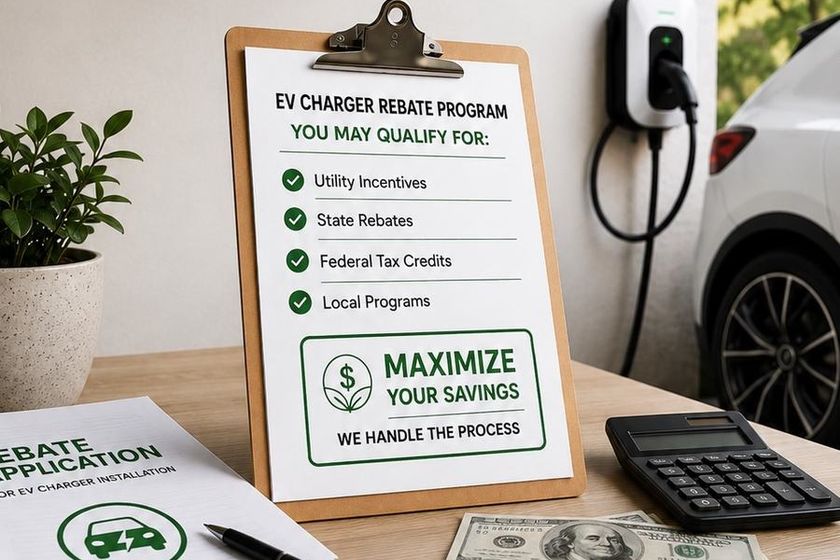
- LADWP customers can receive up to $1,000 toward a qualifying Level 2 charger and its installation
- Customers on EZ-SAVE or Lifeline can qualify for an additional $500
- A dedicated EV meter can open up Time-of-Use EV rates on top of the charger rebate
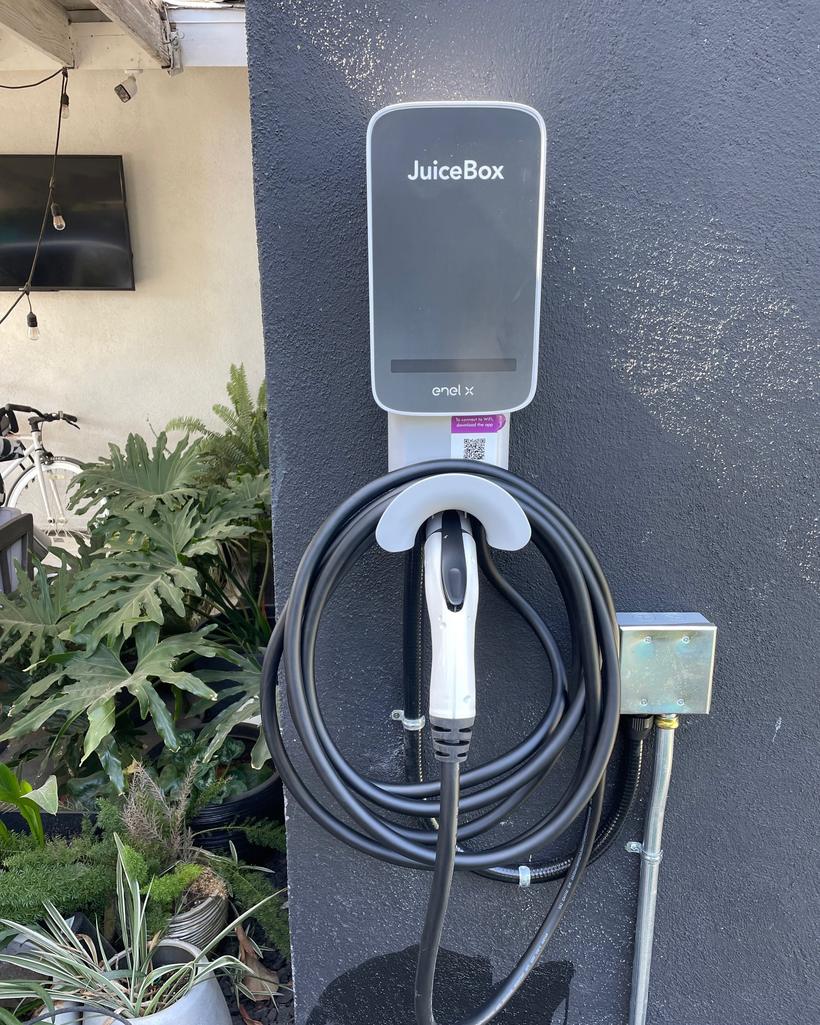
Eligible costs usually cover more than the charger itself: licensed labor, breakers, wire, conduit and the permit can all count toward the claim.
Who Files the Paperwork
In most cases, the installer does.
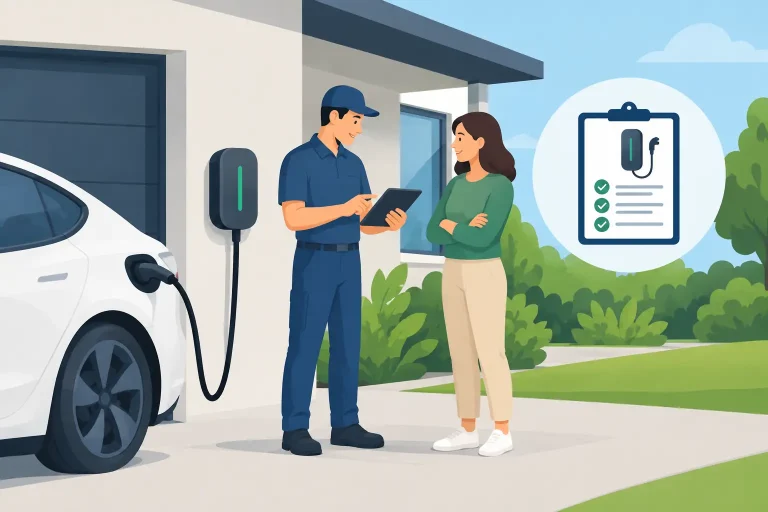
Rebate programs want an itemized invoice, the permit number and proof of final inspection. The contractor holds all three, which is why the claim usually runs through them rather than the homeowner.
That also means an unpermitted install rarely qualifies. The paperwork the rebate asks for is the paperwork a permit produces.
Timing matters too. Some programs pay after the claim is approved rather than at the time of the install, so it is worth knowing whether the rebate reduces the invoice or arrives as a check a few weeks later.
What Tends to Get Rejected
Claims fail for small reasons: a charger that is not on the qualifying list, an invoice that bundles unrelated work, or a submission made after the program window closed. Each of those is avoidable if the rebate is planned before the charger is bought.
How to Check Your Address
Programs vary by utility and by city, so the only reliable answer is address-specific. Send us your address and a photo of your panel, and we will tell you what applies and build it into the fixed price.