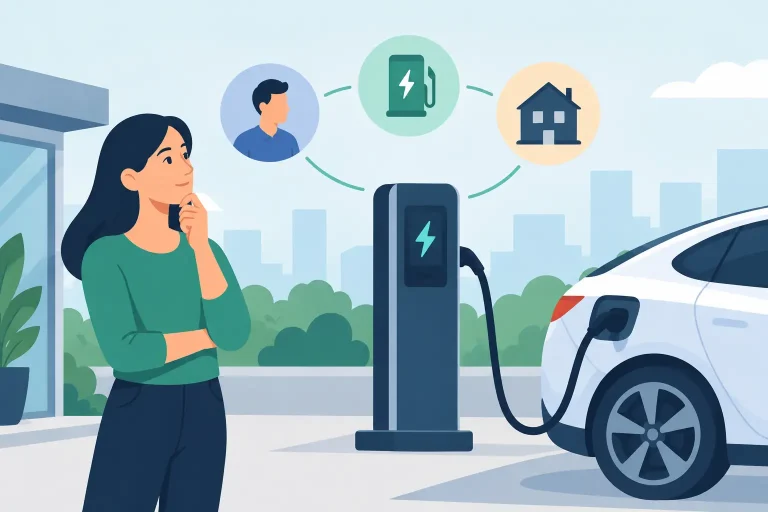
A condo EV charging example is most useful when it looks like a real property decision, not a generic diagram. Picture a resident with a Tesla, an assigned parking space in a gated Los Angeles condominium garage, and an HOA that wants clear answers before approving any work. The resident wants reliable overnight charging. The board wants to protect the building, manage liability, and avoid creating an expensive precedent.
The right solution is usually not the biggest charger or the fastest possible circuit. It is the installation that fits the parking arrangement, electrical capacity, HOA requirements, and the resident’s daily driving needs.
A condo EV charging example from request to charging
In this example, the resident owns their assigned parking space but the garage and electrical infrastructure are common areas. Their parking space is two levels below their unit, so running a circuit directly from the condo’s electrical panel would require a long route through common property.
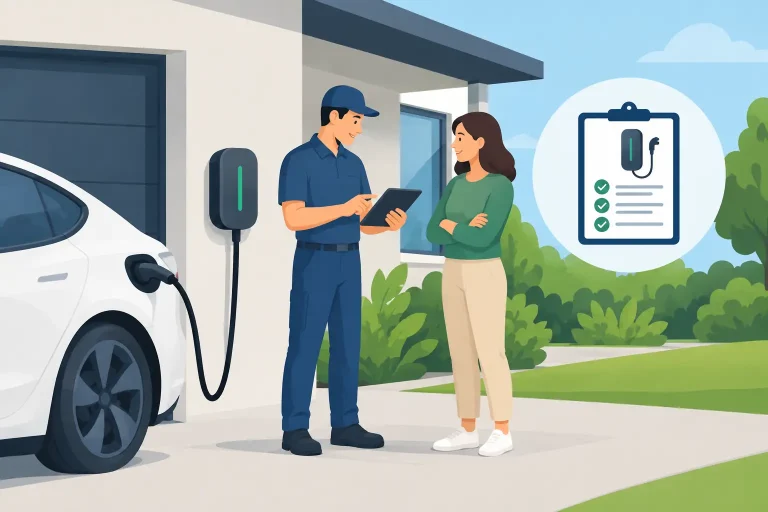
The first step is confirming what electrical source is practical. A licensed electrician reviews the property’s main electrical equipment, available panel capacity, the distance to the parking space, and the route required for conduit and wiring. They also identify whether the charger can be connected to the resident’s meter or whether it would need to draw power from a common-area panel.
In this case, the resident’s individual meter is not accessible from the garage without substantial construction. The HOA agrees to use a common-area electrical panel, provided the resident pays for the installation, electricity usage, maintenance, and any future repairs related to the charger. A networked Level 2 charger with energy monitoring becomes the practical choice because it can document usage for reimbursement.
The installer submits a detailed scope of work: charger location, circuit rating, conduit path, electrical source, protective equipment, permit requirements, and restoration plan. Once the HOA approves the plan and the local permit is issued, the electrician installs the dedicated circuit, mounts the charger near the assigned space, labels the equipment, completes testing, and coordinates final inspection when required.
The resident now plugs in at night and wakes up with enough range for normal commuting. The HOA has a documented agreement and a repeatable process for the next resident who requests charging.
Why the electrical source changes the whole project
Condo charging is different from a single-family home because the parking space is often far from the resident’s panel. That distance can affect materials, labor, and the feasibility of the installation more than the charger itself.
When a charger can connect to the resident’s own electrical service, billing is straightforward. The resident pays for the electricity through their existing utility account. The project may still need HOA approval because conduit often passes through common areas, but there is less disagreement about monthly costs.
A common-area connection can work well when an individual connection is impractical. However, it requires a clear method for tracking energy use. Some properties use a submeter. Others use a smart charger that records consumption. The HOA and resident should decide in writing how reimbursement will be calculated, when it is due, and who handles equipment or network service costs.
There is also a third option for larger properties: a shared charging system. Rather than building one custom circuit for each request, the association may install several managed charging stations or prepare electrical infrastructure for future expansion. This can be a better long-term investment when multiple residents own EVs or expect to buy one soon. It also requires more planning, capital, and agreement among decision-makers.
HOA approval should start with a complete plan
HOA boards are more likely to approve an EV charger when the request answers practical questions before they have to ask them. A vague request to “install a charger in my spot” creates uncertainty. A professional installation proposal creates a path forward.
The proposal should identify the assigned parking space, charger model, electrical source, circuit size, planned wiring route, permit approach, and responsibility for costs. It should also explain how the work will avoid blocking drive aisles, damaging fire-rated surfaces, or creating an unsafe cable path.
For a resident-funded installation, the agreement commonly addresses who owns the equipment, who maintains it, and what happens if the resident sells the unit or moves. The charger may remain with the space, be removed at the resident’s expense, or transfer to a future owner, depending on the association’s rules.
California condo communities may also have legal obligations related to EV charging requests, but every property has different governing documents and conditions. Residents and boards should review their CC&Rs, parking ownership structure, and applicable requirements before finalizing an agreement. An experienced EV charging contractor can provide the technical documentation, while legal or association professionals can address policy questions.
Choosing the right charging speed
For most condo residents, Level 2 charging is the best fit. It uses a 240-volt circuit and can replenish far more range overnight than a standard wall outlet. The exact charging speed depends on the vehicle, charger settings, circuit capacity, and load-management requirements.
More power is not automatically better. A 40-amp or 48-amp charging setup may be appealing, but the building’s available capacity could make a lower setting the smarter option. A properly sized charger that restores the resident’s typical daily mileage overnight is usually sufficient.
Load management can be especially valuable in older buildings or properties where electrical capacity is limited. This equipment can reduce or pause charging when the building demand is high, then resume when capacity is available. It may help avoid a costly service upgrade while still giving residents dependable charging.
The best choice depends on the building. One resident charging a plug-in hybrid has different needs than a garage where ten EV owners may request stations over the next two years.
What affects condo EV charging cost
A condo installation cost is driven less by the brand of EV and more by the property conditions. The main factors are the distance from the electrical source, access to wiring routes, concrete or drywall restoration, panel capacity, permit needs, charger features, and HOA-required documentation.
A parking space next to an available electrical room may allow a relatively simple installation. A space across a large underground garage can require extensive conduit runs, multiple penetrations, firestopping, and coordination with building operations. If the existing electrical system cannot support the new load, the project may need load management or a larger electrical upgrade.
This is why a fast, accurate quote should be based on photos, electrical information, parking layout, and HOA requirements whenever possible. It gives residents and property managers a realistic scope before they commit to the project.
Make the first installation easier for everyone after it
The first charger in a condominium often becomes the template for future requests. That is a reason to document the process carefully, not a reason to delay it indefinitely.
Property managers can create a standard EV charging application that asks residents for their parking-space number, vehicle type, proposed charger, installer information, and preferred electrical source. The HOA can then apply consistent rules around insurance, permits, reimbursement, maintenance, and removal.
Residents benefit from moving forward with a complete proposal rather than trying to solve every building-wide question themselves. A qualified electrician can identify the practical installation options, explain the trade-offs, and provide the documentation the HOA needs to make an informed decision.
For Southern California condo owners, Plug-in LA can help turn a complicated parking-garage question into a clear installation plan with licensed electrical work and step-by-step coordination. The goal is simple: charging where you park, without creating unnecessary work for you or your association.