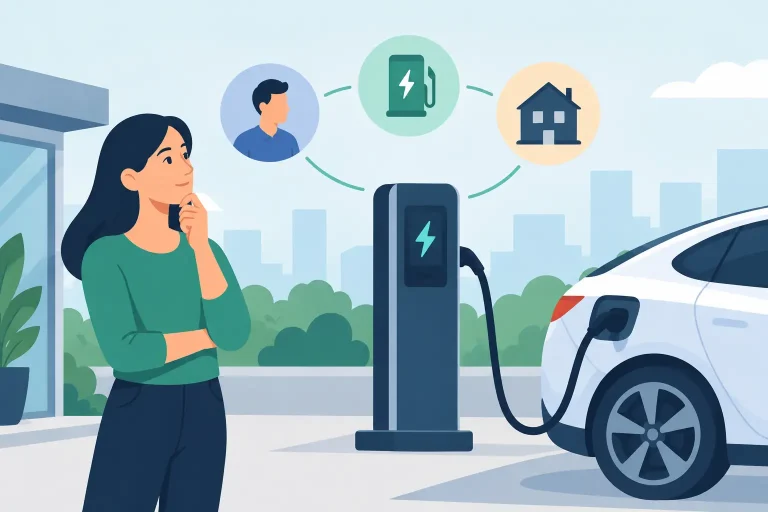
A fleet depot can look ready for electrification long before it is ready to charge vehicles reliably. The parking area may have room, the vehicles may be on order, and chargers may be selected. But if charging demand, electrical capacity, route schedules, and utility coordination are not planned together, the result can be costly upgrades, missed dispatch times, and equipment that cannot support daily operations.
This fleet depot charging planning guide focuses on the decisions that determine whether an EV fleet is practical from day one. The goal is not to install the most chargers possible. It is to build a charging system that gets every vehicle ready for its next route while keeping construction, energy, and operating costs under control.
Start With the Fleet’s Actual Duty Cycle
Charging equipment should follow the work, not the other way around. Begin by documenting how each vehicle operates during a typical day, including miles driven, payload or equipment use, time away from the depot, arrival time, departure time, and expected daily energy use.
A delivery van that returns by 4 p.m. and leaves at 7 a.m. has a long overnight charging window. In many cases, Level 2 charging can restore the energy it needs without expensive high-power equipment. A vehicle that runs two shifts or returns for only a short midday stop may need DC fast charging, more chargers, or a different dispatch plan.
Do not plan around averages alone. The highest-mileage days, hot-weather HVAC use, heavy loads, route detours, and seasonal demand are the conditions that expose an undersized system. Build in reasonable operating margin so a delayed return or a low battery does not disrupt the next morning’s schedule.
Turn miles into energy needs
Vehicle efficiency varies by model, load, terrain, speed, and weather. Instead of relying on a generic miles-per-kilowatt-hour estimate, use manufacturer data and early fleet telematics when available. Then calculate the energy each vehicle must receive during its normal charging window.
For example, if a vehicle needs 80 kWh after a route and has 10 hours parked overnight, it requires an average of roughly 8 kW of delivered charging power before accounting for charging losses. A 19.2 kW Level 2 charger may provide useful flexibility, but it may not be necessary for every parking space. Proper sizing often reduces both equipment cost and the electrical service required.
Match Charger Types to Operations
Level 2 chargers are commonly the foundation of depot charging because vehicles often sit for predictable overnight periods. They are generally less expensive to install than DC fast chargers and can support many fleets when paired with managed charging.
DC fast charging is valuable when vehicles need rapid turnaround, operate multiple shifts, or cannot remain parked long enough to charge at Level 2 speeds. It also requires more planning. Higher power demand can increase utility upgrade costs, introduce demand charges, and require significant space for equipment and electrical infrastructure.
A mixed approach is often the practical choice. Use Level 2 charging at assigned overnight spaces, then add a limited number of DC fast chargers for recovery charging, late returns, unexpected route changes, or high-utilization vehicles. The right mix depends on operating needs, not on which charger has the highest output rating.
Plan for connectors, parking, and vehicle movement
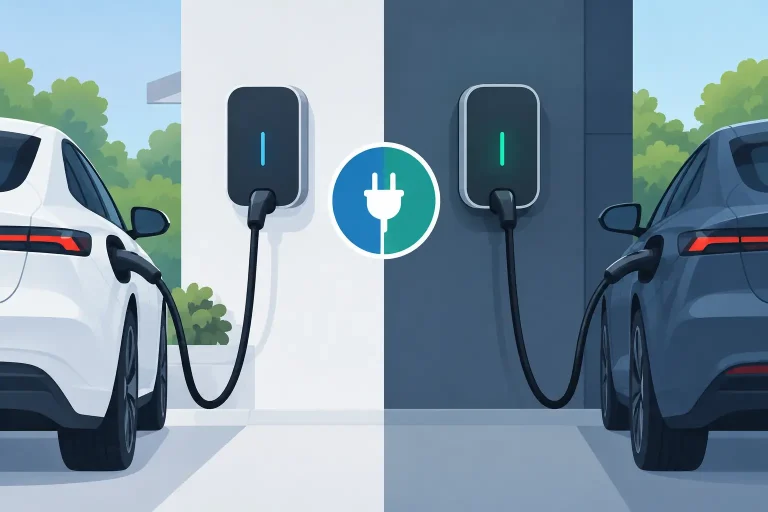
Every charger must work with the fleet vehicles being purchased now and the vehicles likely to be added later. Confirm connector compatibility, cable reach, charging port locations, and whether drivers can park consistently without blocking cable paths or adjacent spaces.
At a busy depot, traffic flow matters as much as charger power. Chargers should not create bottlenecks at gates, loading zones, wash bays, maintenance areas, or emergency access lanes. Designated charging spaces, wheel stops, equipment protection, and clear operating rules help prevent damaged equipment and unnecessary delays.
Verify Electrical Capacity Before Finalizing Equipment
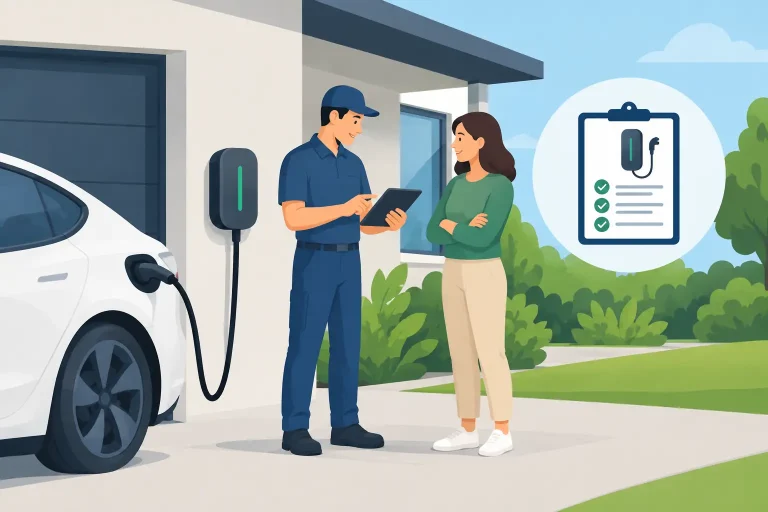
The biggest planning mistake is treating charger selection as the first decision. The electrical service sets the boundaries for the project. A site assessment should review the main service size, existing load, available capacity, panel locations, transformer capacity, feeder routes, and the distance between electrical equipment and parking areas.
A depot may have enough service capacity for a small pilot but not for a full fleet rollout. That does not mean the project should stop. It means the installation should be phased intelligently.
Install conduit, trenching, distribution equipment, and spare capacity where practical during the first construction phase. These items are disruptive and expensive to revisit after pavement, landscaping, or operations are restored. Chargers can be added over time as vehicles arrive and utility capacity becomes available.
Use load management instead of oversizing everything
Smart load management allows multiple chargers to share limited electrical capacity. Rather than delivering maximum power to every plugged-in vehicle at the same time, the system allocates energy based on departure times, battery state, and site limits.
This can reduce the size of an initial service upgrade or postpone one until the fleet expands. It is not a substitute for sufficient capacity forever, but it is a useful planning tool for fleets with predictable dwell times. The charging management platform should be selected with care. Fleet managers need clear visibility into charging status, energy use, fault alerts, and priority rules without adding a complicated daily task for drivers.
Coordinate With the Utility Early
Electrical upgrades and utility work often set the schedule for a depot project. New transformers, service upgrades, switchgear, or distribution changes can take much longer than charger installation itself. Start the utility conversation as soon as the fleet transition is being evaluated, especially when DC fast charging or a large number of Level 2 ports is planned.
Ask what capacity is available at the site, what upgrades may be needed, what information the utility requires, and how rate structures will affect operating costs. Demand charges can materially change the economics of high-power charging. In some cases, charging controls, battery storage, or a revised charging schedule can reduce exposure to expensive peak demand.
For Los Angeles County fleets, local permitting requirements and utility coordination can also vary by property and jurisdiction. A qualified EV charging contractor can help organize site information, electrical design, permit steps, and construction planning before the fleet is waiting on vehicles.
Build the Project in Phases, but Plan the End State Now
Phased deployment is usually the most sensible path for a growing fleet. It limits upfront spending, lets operators learn from real charging data, and avoids installing equipment that does not match future vehicle choices.
The first phase should still reflect the final site plan. Identify the total number of future charging spaces, the likely charger types, electrical pathways, equipment pad locations, and room for switchgear or transformers. Then install the backbone infrastructure needed to make later expansion straightforward.
A practical rollout may begin with a pilot group of vehicles and enough chargers to validate schedules, driver behavior, charging software, and energy use. After the pilot, adjust the design before committing to the next group. This approach is especially useful when vehicle delivery schedules are uncertain or routes are still being redesigned.
Design for Daily Operations, Not Just Installation Day
A charger that is technically installed but difficult to use will create avoidable problems. Decide who plugs in vehicles, who checks charging status, who responds to faults, and what happens when a vehicle returns late or needs priority charging. These responsibilities should be simple enough to follow during a busy shift change.
Drivers need clear instructions on cable handling, parking position, and reporting issues. Maintenance teams need access to chargers and electrical equipment without interfering with depot traffic. Fleet managers need reporting that confirms vehicles are charged, identifies recurring faults, and supports energy-cost tracking.
Reliability also depends on physical protection. Bollards, appropriate cable management, weather-rated equipment, lighting, signage, and safe accessibility should be included in the scope rather than treated as optional extras. They protect the investment and make charging easier to use correctly.
Choose an Installation Partner That Can Coordinate the Details
Fleet charging brings together electrical construction, permitting, equipment selection, software, utility coordination, and operational planning. A low equipment price does not always produce the lowest project cost if the design overlooks service capacity, future expansion, or site logistics.
Work with licensed, insured EV charging professionals who can evaluate the property, provide clear pricing, and explain what is included before construction begins. Plug-in LA helps commercial customers simplify those moving parts with professional charger installation and hands-on project coordination.
The most effective depot plan gives your fleet room to grow without forcing you to pay for every future charger on day one. Start with how your vehicles work, build the electrical foundation carefully, and make every charging decision support a dependable next dispatch.