What the Inspector Is There For
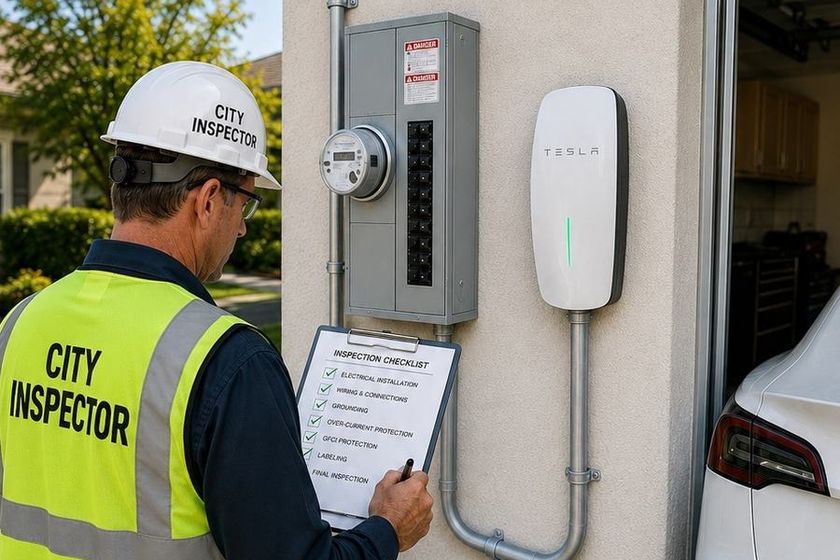
The final inspection is not a formality. It is the city confirming the installation matches the permit and the electrical code.
- The circuit, breaker and wire are sized for the charger’s output
- Conduit, supports and fittings are rated for where they are installed
- Grounding and bonding are complete and correct
- The charger is mounted and labeled as the manufacturer requires
Outdoor installs get extra attention on weather-rated equipment and how the conduit is protected.
The Most Common Corrections
Small details, not big mistakes.
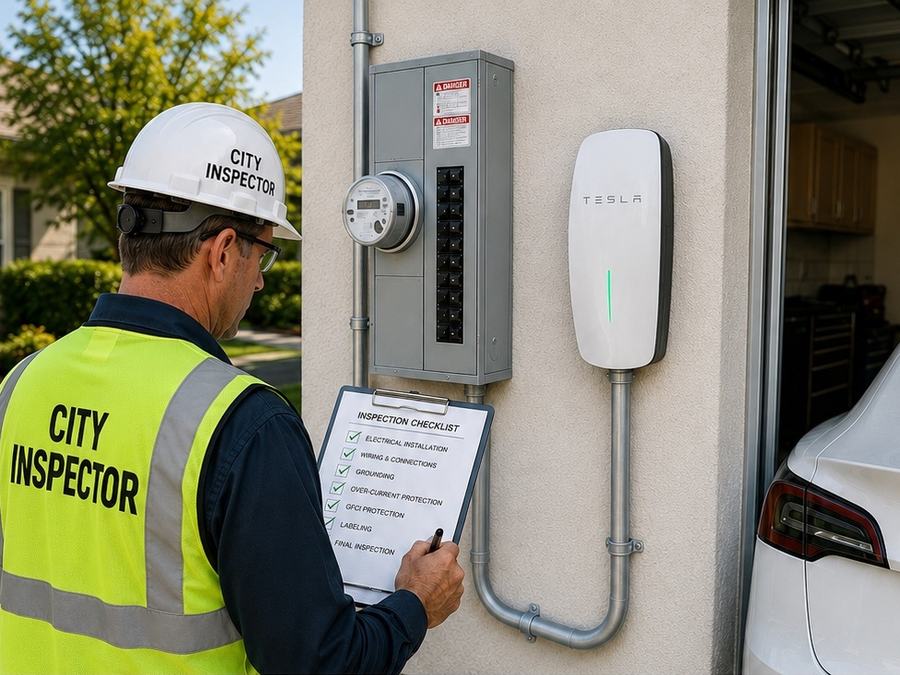
Most failed inspections come down to a missing label, an unsupported run of conduit, or a breaker that does not match what the permit says. Each one means a return visit and a few more days before the charger can be used.
Getting the permit drawing and the installation to match exactly is most of the work of passing the first time.
Inspectors also look at the work around the charger, not just the charger itself. A panel cover that does not close properly, an unlabeled circuit or an old correction from someone else’s job can all come up while they are there.
What You Need to Do on the Day
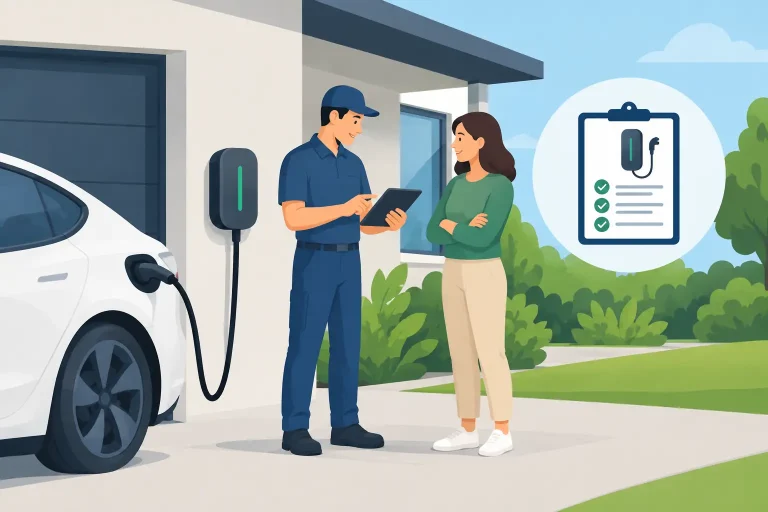
Usually nothing more than giving the inspector access to the panel and the charger location. We schedule the inspection, meet the inspector, and handle any correction if one is needed.
Why It Matters Later
A finaled permit is what rebate programs, insurers and future buyers ask for. It is the record that the work was done properly.