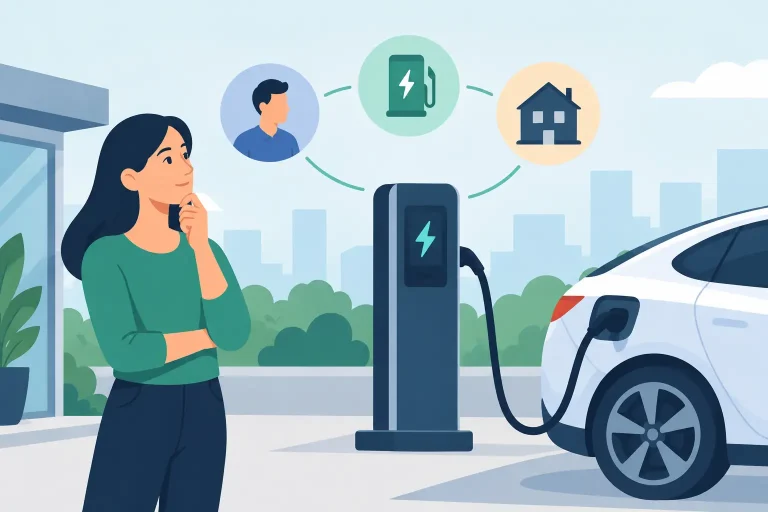
A home charger can be simple in a single-family house. In a condominium, the condo charging approval process adds another layer: your parking space may be assigned to you, but the electrical equipment, garage walls, conduits, and utility capacity are often shared property. The right preparation turns that complexity into a clear, manageable project.
For Southern California condo owners, the fastest path is usually not submitting a vague request to the HOA and waiting. It is starting with a realistic installation plan, clear documentation, and an electrician who can explain exactly what the property needs.
Why condo charger approval takes more coordination
A Level 2 EV charger needs a dedicated electrical circuit, typically running from an electrical panel to your parking space. In a condo building, that route can cross common areas, pass through a shared garage, use a utility room, or require work near equipment owned by the association.
That is why an HOA or property manager needs more than confirmation that you own an EV. They need to understand where the charger will be installed, how power will reach it, whether the building has available electrical capacity, who will pay for the work, and who will maintain the equipment later.
The approval process is designed to protect the building and its residents. It can also prevent avoidable problems, such as an improperly sized circuit, exposed conduit in a parking area, or a charger connected to a common-area electrical meter without a billing arrangement.
Approval timelines vary. A newer low-rise building with nearby panel capacity may be straightforward. A high-rise garage, an older property with constrained service capacity, or a space far from the electrical room may require more design work and a longer review.
Start with the HOA rules and parking rights
Before selecting equipment or promising an installation date, review your HOA’s governing documents and any published architectural or EV charging policy. Ask the property manager whether the association has an established application form, preferred charging locations, design standards, insurance requirements, or rules for contractor access.
Your parking arrangement matters. A deeded space, an exclusive-use space, a leased space, and an unassigned common-area space can be treated differently. The board may have authority over the walls, ceilings, electrical rooms, and pathways even when your parking space is exclusively assigned to you.
It also helps to ask whether other residents already have chargers. Existing installations can reveal the building’s approved routing method, electrical metering approach, and expected review process. Do not assume a neighbor’s charger means your installation will be identical, though. Their space may be closer to a panel or served by a different electrical system.
Understand the cost and maintenance questions early
Most boards want a clear answer to a practical question: who is responsible if something needs repair? Your application may need to state that you will cover installation, electrical use, maintenance, repair, removal, and restoration associated with your charging equipment.
If the charger draws power through your own meter, usage is relatively simple. If it must connect to a common-area meter, the project may need a separate meter, submetering, or a charger with a billing solution. That decision can affect both cost and approval time.
California has protections intended to help owners install EV charging stations in qualifying circumstances, but building conditions, safety requirements, association procedures, and cost responsibilities still matter. Treat the policy review as a planning step, not an obstacle to work around. For building-specific guidance, review your association documents and consult the appropriate qualified professionals.
Build an approval package the board can act on
A complete request gets reviewed faster than a short email asking for permission to install a charger. The board or manager should be able to see the scope, safety measures, and responsibilities without chasing missing details.
For most projects, a useful package includes the proposed charger make and model, charging amperage, a simple site plan showing the parking space and equipment location, the proposed conduit route, and details about the source panel. It should also identify the licensed electrical contractor, anticipated permit requirements, insurance documentation if requested, and how electricity will be metered.
Photos are valuable. Clear images of the parking space, nearby walls or columns, electrical rooms, and the route from panel to charger help a reviewer visualize the work. If trenching, concrete coring, or significant wall penetration is necessary, show that upfront. Surprises after approval are one of the most common reasons projects slow down.
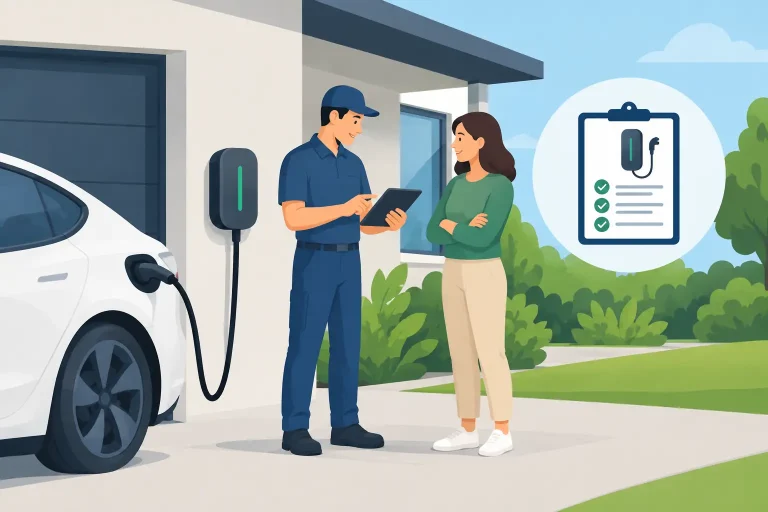
A professional electrical site assessment is especially useful when the charger will be far from the panel or when the building’s electrical capacity is unknown. The assessment can determine whether a new dedicated circuit is feasible, whether a load calculation is needed, and whether a load-management solution could avoid a costly service upgrade.
Choose the charger after evaluating the electrical design
Many EV drivers start by choosing the highest-amperage charger available. In a condo, the best option is the one that delivers dependable overnight charging while fitting the building’s electrical capacity and approved installation path.
For example, a 40-amp circuit may be an excellent fit for one property, while a lower-amperage configuration with smart load management may make more sense in another. A charger that works with your vehicle, supports the desired connector, and can be safely powered by the available infrastructure is more valuable than a higher rating that triggers major upgrades.
The charger should also be suitable for the installation environment. Garage mounting, weather exposure, cable management, access control, and protection from vehicle impact all deserve consideration. A clean design reassures the board and gives you a safer, more durable installation.
The condo charging approval process, step by step
Once you have the right information, the condo charging approval process usually follows a predictable sequence.
First, confirm the HOA submission requirements and any deadline for architectural committee or board meetings. Next, have a qualified electrician evaluate the parking space, electrical panel, route, and likely permit scope. Then submit a complete proposal with drawings, equipment details, contractor credentials, and responsibility terms.
The association may approve the plan, request revisions, or ask for additional information. Common questions involve conduit appearance, electrical capacity, access to utility rooms, liability coverage, working hours, and future removal of the equipment. Responding promptly with specific answers keeps the review moving.
After written approval, the contractor can finalize the design, pull required permits, schedule the work, and coordinate access with management. Depending on the local jurisdiction and project scope, inspections may be required before the charger is energized. Your contractor should not treat HOA approval as a substitute for electrical permitting, and the HOA should not treat a permit as a substitute for its own property approval.
Finally, retain the approval letter, permit records, inspection documentation, equipment manuals, and any maintenance agreement. If you sell the unit or the association updates its records, this paperwork makes ownership and responsibility much easier to document.
Common delays and how to avoid them
The most avoidable delay is applying before the electrical route has been evaluated. A board may be willing to approve charging in principle but unable to approve an undefined path through common property. Start with facts, not assumptions.
Another issue is incomplete cost clarity. State whether the installation will connect to your meter, whether an electrical upgrade may be needed, and whether any future common-area work could affect the equipment. If a solution requires more than a basic branch circuit, explain the alternatives instead of presenting the board with a single expensive option.
Contractor coordination can also create friction. Condo projects often require scheduled garage access, utility-room entry, certificates of insurance, noise restrictions, and advance notice to residents. An EV charging specialist can coordinate these details while keeping the scope focused on what the building actually needs.
When the building needs a larger charging plan
A single resident request can expose a broader opportunity. If several owners are considering EVs, the board may benefit from a phased charging strategy rather than approving one-off installations with different equipment and routes.
A building-wide assessment can identify available capacity, preferred conduit corridors, panel upgrade needs, metering options, and a scalable charger standard. This approach may cost more to plan initially, but it can reduce repeated construction, protect garage appearance, and give the association a fair process for future requests.
Plug-in LA helps condo owners and property decision-makers evaluate these practical details, coordinate the electrical work, and move from approval to permitted installation with less back-and-forth.
The best next step is simple: gather your HOA requirements, document your parking space, and get a professional electrical assessment before submitting your request. A clear plan gives the board confidence, protects the property, and gets you closer to charging where you park.