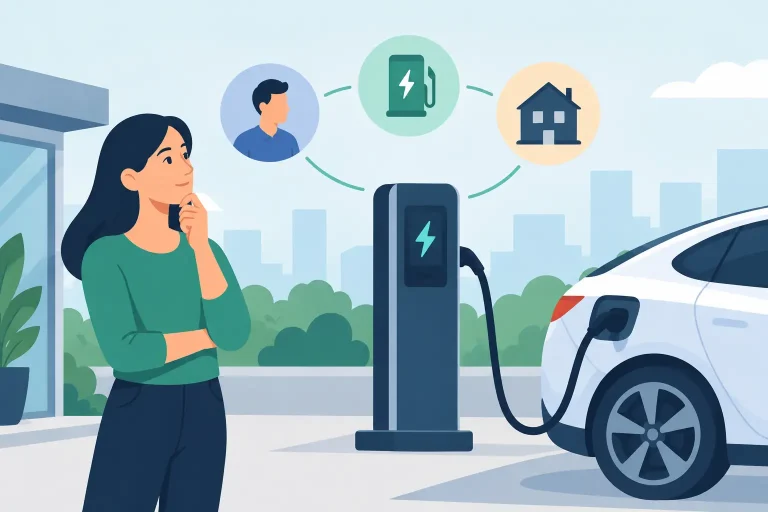
A new EV should make daily driving easier, not turn every evening into a search for public charging. Yet the top mistakes during charger installation can leave owners with slow charging, tripped breakers, unexpected costs, or work that must be redone. The good news is that most of these problems are avoidable when the installation is planned around the vehicle, the electrical system, and the property.
For Los Angeles homeowners, condo residents, and property managers, the right setup is rarely just a matter of mounting a charger on the wall. A qualified installer should confirm capacity, equipment requirements, permitting needs, cable routing, and future charging demand before work begins.
Top Mistakes During Charger Installation to Avoid
Choosing a charger before evaluating the electrical panel
It is easy to start with the charger brand, connector, or advertised charging speed. But the electrical panel determines what the property can safely support. A Level 2 charger may require a dedicated 240-volt circuit, and the circuit size must be based on a proper load calculation, not a guess based on the panel’s main breaker rating.
A 200-amp panel is not automatically ready for a high-amperage charger. Existing air conditioning, electric cooking, pool equipment, solar, battery storage, and other loads all affect available capacity. In some homes, a lower-amperage setting delivers excellent overnight charging without a panel upgrade. In others, a service or panel upgrade, load-management equipment, or a different charging plan may be the better long-term solution.
The mistake is not having a smaller panel. The mistake is installing equipment without understanding how the full electrical system will handle it.
Assuming the fastest charger is always the best choice
More power can reduce charging time, but it also can increase equipment, wiring, and upgrade costs. Most drivers do not need to replenish an empty battery every night. If a vehicle sits at home for eight to ten hours, a properly sized Level 2 charger can cover a typical daily commute comfortably.
The best charging rate depends on the vehicle’s onboard charging capability, daily mileage, available panel capacity, and how long the vehicle is parked. A charger capable of 48 amps may be a smart choice for one household, while a 32- or 40-amp configuration is more cost-effective and just as convenient for another. Selecting the right capacity protects the budget without sacrificing the experience of waking up charged.
Using an outlet setup when a hardwired installation fits better
Plug-in chargers can be appropriate in certain situations, particularly where portability is useful and the receptacle is installed correctly for continuous use. But a high-current outlet is not a shortcut. It requires the right receptacle, wire size, breaker, enclosure, and installation quality.
Hardwired chargers eliminate one connection point and are often preferred for higher-output installations. They can also be a cleaner option for outdoor locations and garages where the charger will remain in place. The right choice depends on the charger, the circuit rating, and how the equipment will be used. What matters is matching the installation method to the equipment specifications and local code requirements.
Treating permits and inspection as optional
Permits can feel like a delay when you are ready to charge at home, but skipping them can create more expensive delays later. Unpermitted electrical work may cause issues during a home sale, after an insurance claim, or when a property manager needs records for a multi-unit site. It can also mean the work was never independently checked for basic safety and code compliance.
Permit requirements vary by jurisdiction and project scope. A professional EV charger installer can identify what applies, prepare the required information, and coordinate the process. This is especially valuable in Los Angeles County, where local requirements can differ between cities and properties.
For commercial, workplace, and multifamily installations, the administrative side can be even more involved. Electrical plans, site access, utility coordination, accessibility considerations, and incentive documentation may all affect the timeline. Addressing these items early keeps the project moving.
Underestimating distance, routing, and installation conditions
A charger located near the parking space looks simple on a floor plan. The actual route from the panel to that location may be anything but simple. Long runs through finished walls, crawl spaces, attics, detached garages, concrete, or underground areas can affect labor, materials, and the final quote.
Outdoor equipment also needs thoughtful placement. The charger and cable should be accessible without creating a trip hazard or forcing the cable to stretch across a walkway. The installation must use equipment rated for the environment, with appropriate protection from weather and physical damage.
A clear site review considers more than the shortest path. It looks at practical parking behavior, door clearance, cable reach, visibility, future landscaping, and whether another EV may need to charge nearby later.
Installing a charger where it will be inconvenient every day
The charger location should work with the vehicle, not just with the nearest wall. A cable that barely reaches the charge port may be frustrating when the car is parked slightly differently. A charger placed behind stored items or on the wrong side of a garage can make a routine task unnecessarily awkward.
Before selecting the spot, park the EV where it will normally sit and identify the charge-port location. Think through how the cable will be managed when it is not in use. For shared parking or apartment buildings, consider how drivers will access the charger, how spaces will be assigned, and whether the location supports clear rules for usage and billing.
Small placement decisions have a big effect because charging is a repeated habit. A convenient setup is more likely to be used properly and appreciated for years.
Forgetting about the next vehicle or the next phase
A single charger may be all a household needs now, but EV ownership often expands. A second driver may purchase an EV, a teen may begin driving, or a property owner may want to add charging for tenants or employees. Planning for future capacity can reduce disruption and cost later.
That does not mean every project needs a major upgrade on day one. It means the installer should discuss the available options. During initial work, it may make sense to leave space in the panel, install conduit for a future circuit, select network-capable equipment, or plan a load-sharing approach for two chargers.
For multifamily and commercial sites, phased infrastructure is often the practical answer. Installing pathways and electrical capacity strategically can make future expansion far easier than reopening walls, trenching again, or redesigning the whole system after demand grows.
Ignoring charger compatibility and smart features
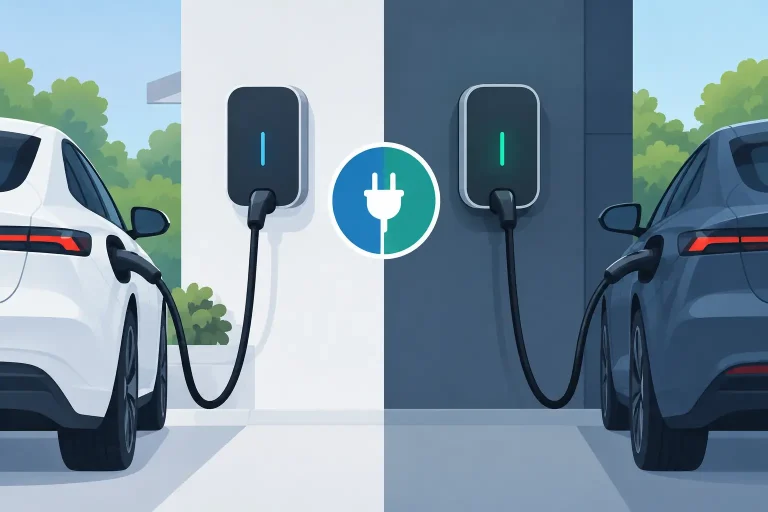
Tesla, J1772, NACS, and adapter options can make charger selection sound more complicated than it needs to be. Compatibility should be verified before purchase, particularly for mixed-vehicle households and shared sites. The goal is simple: every expected driver should be able to charge safely and conveniently.
Smart features deserve the same practical approach. Wi-Fi connectivity, scheduling, energy monitoring, access control, and load sharing can be valuable, but only when they solve a real need. A homeowner on a time-of-use utility rate may benefit from scheduled overnight charging. A workplace or apartment property may need user access controls and reporting. Someone who wants a dependable, straightforward home charger may prefer fewer features and a simpler experience.
Hiring based on the lowest number alone
An unusually low quote can omit key parts of the project: permits, trenching, panel work, a longer wire run, equipment, patching, or inspection coordination. Price matters, but clarity matters just as much. A useful quote explains what is included, what assumptions were made, and what site conditions could change the scope.
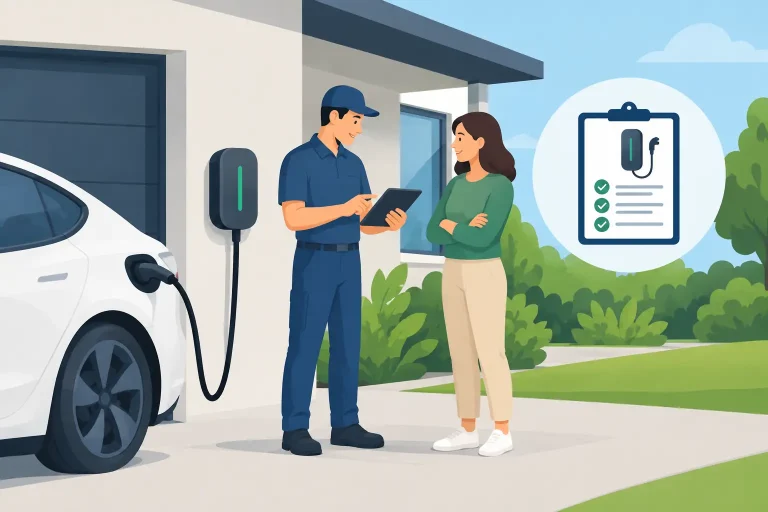
EV charging is specialized electrical work. The installer should be licensed and insured, familiar with the charger being installed, and prepared to stand behind the work. Fast pricing is helpful, especially when buying a new vehicle, but it should still be grounded in the details of the property.
A Better Way to Plan an EV Charger Installation
Start with your driving routine and parking setup. Then have a qualified electrician assess the panel, intended charger location, circuit route, and applicable permit requirements. From there, select charging equipment that fits both your vehicle and your actual charging needs.
For homes, this approach avoids paying for capacity you will not use while ensuring the installation is ready for daily life. For condos, workplaces, fleets, and multifamily properties, it creates a clearer path through shared electrical systems, access rules, and future expansion.
Plug-in LA helps customers handle these decisions with licensed installation, clear upfront guidance, and support from quote through completion. A charger installed with the right plan behind it becomes the easiest part of owning an EV: park, plug in, and leave the next morning ready to go.